Type of Website: 10 Essential Options to Launch Your Business in 2026

Updated: Feb 9
Your website is your digital headquarters. It’s your primary sales engine, your brand’s first handshake, and the central hub of your operations. Yet, with a vast array of options, selecting the correct type of website can be a daunting first step. The structure you choose must align perfectly with your business objectives. Are you focused on selling products, showcasing a creative portfolio, or building an engaged community?
The answer to that question fundamentally shapes the digital foundation you need to build. An e-commerce store, for example, has vastly different functional requirements compared to a service-based business site. Similarly, a blogger's content platform is built entirely differently from a non-profit's donation portal. Choosing a mismatched website type often leads to wasted resources, missed commercial opportunities, and a digital presence that ultimately fails to achieve its core purpose. Getting this decision right from the outset is crucial for long-term success.
This comprehensive guide is designed to provide clarity and direction. We will break down the 10 most essential website types, exploring the unique purpose of each one. For every type, we’ll detail its must-have features, ideal audience, and provide actionable strategies to help you make an informed decision. Whether you're a freelancer, a small business owner, or an e-commerce entrepreneur, this breakdown will give you the insight needed to select, plan, and launch the perfect online presence for your venture. Let’s explore which digital foundation is right for you.
1. E-Commerce Websites
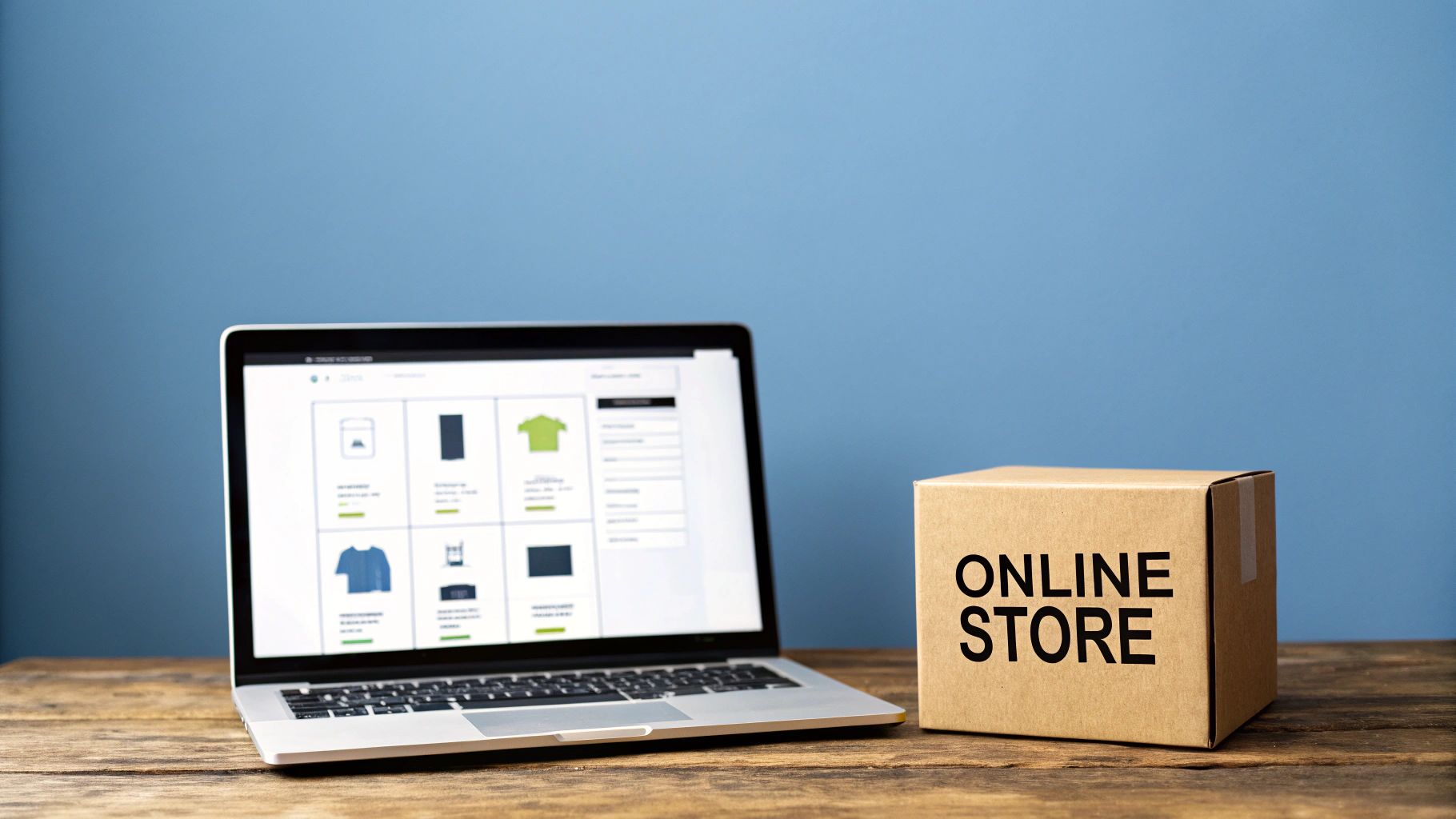
An e-commerce website is a digital storefront designed to sell products or services directly to consumers online. This type of website functions as a comprehensive platform for managing inventory, showcasing products in a catalogue, processing orders, and securely handling financial transactions through integrated payment gateways. For retail businesses, dropshippers, and creators selling digital goods, an e-commerce site is fundamental for reaching a global audience beyond the limitations of a physical location.
Key Features and Best Practices
Successful e-commerce platforms like Shopify stores or sites built with Wix eCommerce prioritise a seamless user journey. Must-have features include a user-friendly shopping cart, a streamlined multi-step checkout process, and detailed product pages. For e-commerce, successful sales hinge on high-quality visuals, making it crucial to understand how to shoot product photos effectively.
Here are actionable tips to optimise your online store:
Enhance Search Visibility: Integrate relevant keywords into your product titles, descriptions, and image alt-text to improve your rankings on search engines.
Build Trust with Social Proof: Display customer reviews, ratings, and user-generated content prominently on product pages to build credibility and encourage purchases.
Optimise for Mobile: With over 70% of e-commerce traffic originating from mobile devices, a responsive, mobile-first design is non-negotiable for capturing sales.
Recover Lost Sales: Implement automated email sequences to target users who abandon their shopping carts, offering a reminder or a small discount to entice them back.
Who Needs an E-Commerce Website?
This website type is ideal for any business selling physical or digital items, from small artisan shops like Etsy sellers with custom sites to larger retailers. Choosing the right platform is a critical first step; for a detailed comparison, explore our guide to the best e-commerce website builders in the UK to find the perfect fit for your business needs.
Ready to build your digital storefront? Contact Baslon Digital today for a consultation on creating a powerful e-commerce website that drives sales and grows your brand.
2. Service-Based Business Websites
A service-based business website acts as a digital brochure and client-generation engine for professionals offering their expertise. Unlike e-commerce sites, the primary goal isn't to sell products but to build trust, showcase skills, and persuade visitors to book a consultation or request a quote. For consultants, coaches, designers, and tradespeople, this type of website is crucial for establishing credibility and generating a steady stream of qualified leads.
Key Features and Best Practices
An effective service website converts visitors by clearly communicating value and making it simple to take the next step. Core features include detailed service pages, a compelling portfolio or case studies, and prominent calls-to-action (CTAs). For businesses providing services, understanding how to effectively attract clients is paramount. You can learn how to build a website for your service business that wins clients and solidifies your professional presence.
Here are actionable tips to optimise your service website:
Showcase Results with Case Studies: Go beyond a simple gallery. Create detailed case studies that outline the client's problem, your solution, and the measurable results you delivered.
Simplify the Booking Process: Integrate an online scheduling tool like Calendly or Wix Bookings to allow potential clients to book appointments directly, reducing administrative friction.
Build Authority with Content: Publish blog posts or resources that address your target audience's pain points, positioning you as an expert and improving your site's SEO.
Use Video Testimonials: Enhance credibility by featuring video testimonials from satisfied clients. Authentic, spoken endorsements are often more powerful than written reviews.
Who Needs a Service-Based Business Website?
This website type is essential for any professional or company selling expertise, skills, or time. This includes freelancers, digital marketing agencies, legal and accounting firms, wellness coaches, photographers, and consultants. It serves as the central hub for your marketing efforts, demonstrating your value proposition and guiding potential clients toward conversion.
Ready to turn your expertise into a client-generating machine? Contact Baslon Digital today to discuss building a professional service website that showcases your value and attracts your ideal clients.
3. Portfolio Websites
A portfolio website is a digital showcase designed to display your creative work, skills, and professional achievements. This type of website acts as a visual resume and a powerful marketing tool, commonly used by designers, developers, photographers, and other creative professionals. It provides a curated platform to demonstrate expertise through high-quality work samples, allowing potential clients and employers to assess your style and capabilities.

Key Features and Best Practices
Effective portfolio websites, whether custom-built or created with platforms like Wix and Squarespace, focus on letting the work speak for itself. Essential features include a visually appealing gallery or project grid, detailed case studies for each piece, and a clear "About Me" section that tells your professional story. For freelancers and creatives, a strong portfolio is often the deciding factor for winning new business.
Here are actionable tips to optimise your portfolio:
Curate Your Best Work: Quality triumphs over quantity. Select only your strongest projects that align with the type of work you want to attract.
Provide Project Context: For each piece, briefly explain the goal, your specific role, the challenges faced, and the solution you delivered to demonstrate your problem-solving skills.
Optimise for Performance: Use fast-loading, compressed images to ensure your site is quick and responsive. Slow load times can deter potential clients before they even see your work.
Include Social Proof: Feature client testimonials or key metrics (like sales impact or user engagement) alongside relevant projects to build credibility and trust.
Who Needs a Portfolio Website?
This website type is indispensable for any professional or business whose work is visual. It's the go-to choice for graphic designers, web developers, photographers, artists, and UX/UI designers. To ensure your showcase effectively converts visitors into clients, it’s vital to follow a strategic approach. For a step-by-step walkthrough, see our guide on how to create a portfolio website that wins clients.
Ready to showcase your talent? Contact Baslon Digital to design a stunning portfolio website that highlights your skills and attracts your ideal clients.
4. Blog and Content Websites
A blog or content website is a platform dedicated to publishing articles, insights, and educational material on specific topics. This type of website serves as a powerful tool for building brand authority, establishing thought leadership, and attracting a dedicated audience through high-quality, consistent content. By focusing on valuable information, businesses and individuals can generate significant organic traffic from search engines, which can then be monetised through ads, affiliate links, or by funnelling visitors into a sales process.
Key Features and Best Practices
Successful content platforms, from the HubSpot Blog to influential sites like Neil Patel, prioritise reader engagement and SEO. Essential features include a clean, readable layout, clear navigation with content categories, and prominent calls-to-action for newsletter subscriptions. The core of this website type is the content itself, which must be expertly crafted to attract and retain an audience.
Here are actionable tips to optimise your blog:
Plan Your Content: Develop a clear content calendar and maintain a consistent publishing schedule to keep your audience engaged and signal relevance to search engines.
Target Niche Keywords: Research and target long-tail keywords (phrases of three or more words) that have lower competition to rank faster and attract highly qualified traffic.
Create In-Depth Articles: Write comprehensive, valuable posts that fully answer a user's query. Longer, well-researched content often performs better for competitive search terms.
Incorporate Multimedia: Break up text and increase engagement by using images, videos, and infographics. This improves user experience and time-on-page metrics.
Who Needs a Blog or Content Website?
This website type is perfect for service-based businesses, consultants, coaches, and industry experts aiming to attract clients through valuable content. It is also ideal for affiliate marketers, niche enthusiasts, and creators who want to build a community and monetise their expertise. For a deep dive into using a blog to grow your business, read our guide on blogging for business and driving growth.
Ready to build your authority and attract organic leads? Contact Baslon Digital today to create a content-driven website that becomes your most powerful marketing asset.
5. Membership and Community Websites
A membership website is a gated online platform that offers exclusive content, resources, or community access to paying subscribers. This type of website excels at creating recurring revenue streams by providing ongoing value, such as premium courses, private forums, mastermind groups, or specialised digital tools. For coaches, educators, creators, and professional associations, a membership site is a powerful tool for building a loyal, engaged community and fostering long-term customer relationships.
Key Features and Best Practices
Successful membership platforms, like those built with Circle or Mighty Networks, focus on delivering consistent value and fostering member interaction. Essential features include secure content gating, tiered subscription levels, member directories, and integrated communication tools like forums or direct messaging. The core goal is to make members feel they are part of an exclusive, supportive group.
Here are actionable tips to optimise your membership site:
Define a Clear Value Proposition: Clearly articulate the unique benefits and outcomes members will receive at each subscription tier to attract sign-ups and reduce churn.
Create 'Quick Wins' for New Members: Design your onboarding sequence to deliver immediate, tangible value within the first week, reinforcing their decision to join.
Foster Member-to-Member Interaction: Use forums, group challenges, and live events to encourage members to connect with each other, which significantly increases retention and "stickiness."
Boost Engagement with Live Events: Host regular webinars, Q&A sessions, or group coaching calls to provide fresh content and create a sense of shared experience within the community.
Who Needs a Membership Website?
This website type is ideal for any expert, creator, or organisation with specialised knowledge to share. It's a perfect fit for fitness instructors offering workout libraries, business coaches running mastermind groups, and creative professionals teaching skills through ongoing tutorials. Platforms like Kajabi and Teachable are popular choices for building these communities from the ground up.
Want to build a thriving community and generate recurring revenue? Contact Baslon Digital to explore how a custom membership website can transform your business.
6. Personal Branding and Resume Websites
A personal branding website is a digital hub designed to showcase an individual's professional identity, skills, and accomplishments. This type of website acts as an interactive, expanded resume, giving professionals a platform to control their online narrative and stand out to recruiters, clients, or collaborators. For freelancers, consultants, job seekers, and industry leaders, it is a powerful marketing tool that centralises their portfolio, expertise, and personal brand in one accessible location.
Key Features and Best Practices
Effective personal branding sites, whether for an executive or a creative freelancer, go beyond a simple list of past jobs. They tell a compelling career story. Key features include a detailed portfolio or case studies section, a professional blog to demonstrate thought leadership, and prominent testimonials. The design should be clean, professional, and reflect the individual's personal brand identity.
Here are actionable tips to optimise your personal website:
Secure a Professional Domain: Use your full name (e.g., FirstNameLastName.co.uk) for a professional and memorable URL that is easy for recruiters to find.
Craft a Compelling Value Proposition: Your homepage should immediately communicate who you are, what you do, and the unique value you offer.
Showcase, Don't Just Tell: Instead of just listing responsibilities, highlight measurable achievements and outcomes with specific data or case studies.
Integrate Social Proof: Link to media mentions, podcast interviews, published articles, or speaking engagements to build credibility and authority in your field.
Who Needs a Personal Branding Website?
This website type is essential for any professional looking to manage their online reputation and advance their career. It’s ideal for job seekers wanting to supplement their LinkedIn profile, consultants and speakers attracting new clients, and authors or entrepreneurs building a community around their work. A personal site allows you to own your search results and make a lasting first impression.
Ready to build a personal brand that opens doors? Contact Baslon Digital today to create a professional website that showcases your unique talents and expertise.
7. Nonprofit and Charity Websites
A nonprofit or charity website is a digital hub designed to advance a social cause, build a community, and drive fundraising efforts. This type of website must effectively communicate an organisation's mission, showcase its impact through compelling storytelling, and provide clear pathways for supporters to get involved. It functions as a central point for collecting donations, recruiting volunteers, and sharing crucial information with stakeholders, beneficiaries, and the public. For organisations from local community services to international aid groups, a well-crafted website is essential for building trust and mobilising support.
Key Features and Best Practices
Successful nonprofit websites, like those of Doctors Without Borders or local animal rescues, balance emotional connection with operational transparency. Key features include a prominent and secure donation system, clear calls to action for volunteering, and detailed reports on how funds are utilised. The goal is to make supporting the cause as simple and rewarding as possible, using powerful narratives to inspire action.
Here are actionable tips to optimise your nonprofit website:
Lead with Impact Stories: Centre your homepage and key landing pages around powerful testimonials, case studies, and videos that show the real-world impact of your work.
Make Donating Effortless: Integrate a multi-step, mobile-friendly donation form with multiple payment options like PayPal, debit/credit card, and direct debit. Clearly display calls-to-action for donations on every page.
Build Trust Through Transparency: Dedicate a section of your site to financial reports, governance policies, and progress updates on specific campaigns to build donor confidence and credibility.
Showcase Volunteer Opportunities: Create a dedicated volunteer portal with clear descriptions of roles, time commitments, and an easy-to-use application form to streamline recruitment.
Who Needs a Nonprofit or Charity Website?
This website type is indispensable for any registered charity, community interest company (CIC), or mission-driven organisation. It serves environmental groups, educational foundations, health research nonprofits, and animal welfare organisations. A strong online presence is vital for establishing legitimacy, reaching a wider audience of potential donors, and efficiently managing supporter engagement and communications.
Need to create a website that inspires action and drives your mission forward? Contact Baslon Digital to discuss building a compelling nonprofit website that amplifies your impact.
8. Directory and Listing Websites
A directory and listing website is an online platform designed to aggregate and organise information about businesses, professionals, or resources. This type of website acts as a searchable database, connecting users with specific services or products, often within a particular niche or geographical area. From local business directories like Yelp to industry-specific platforms like Angi for home services, these sites thrive by making discovery easy and providing valuable user-generated content like reviews and ratings.
Key Features and Best Practices
Successful directory websites, such as TripAdvisor or Clutch, provide immense value by simplifying the decision-making process for consumers. Essential features include advanced search filters, a robust review and rating system, and clear, detailed profiles for each listing. The core function is to build a critical mass of high-quality, accurate listings that users can trust.
Here are actionable tips to build a successful directory:
Focus on a Niche: Start with a specific industry or location to build authority and a dedicated user base before expanding. This makes it easier to gain initial traction.
Implement a Verification System: Provide an easy process for business owners to "claim" and verify their listings. This ensures data accuracy and builds trust with users.
Encourage User-Generated Content: Actively prompt users to leave reviews and ratings, perhaps through incentives, to create social proof and fresh content for search engines.
Prioritise Mobile Experience: A significant portion of directory searches happens on the go. A fast, mobile-responsive design is crucial for a positive user experience.
Who Needs a Directory and Listing Website?
This website type is ideal for entrepreneurs looking to create a community hub, industry associations providing a member database, or marketers aiming to build a valuable resource in a specific niche. It serves as a powerful monetisation model through premium listings, advertising, and lead generation. The success of a directory hinges on its ability to connect two distinct audiences: businesses seeking visibility and customers seeking reliable information.
Want to build a valuable online community? Get in touch with Baslon Digital to explore creating a custom directory and listing website tailored to your niche.
9. SaaS and Web Application Websites
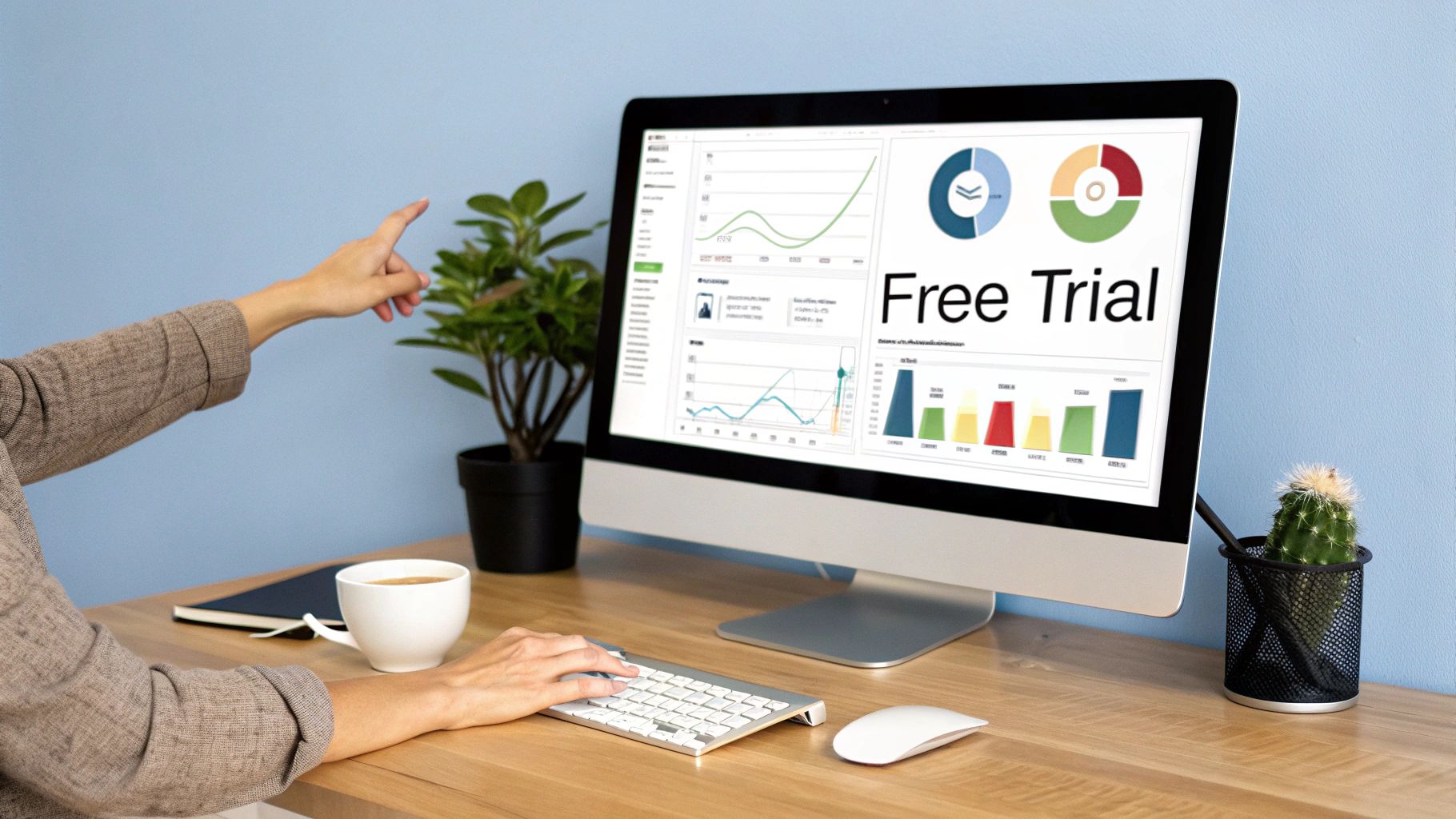
A SaaS (Software-as-a-Service) or web application website is a specialised platform designed to market and deliver subscription-based software directly through a web browser. This type of website serves as the primary tool for demonstrating a product's value, capturing leads, and converting visitors into paying subscribers. For software companies, a SaaS site is critical for user acquisition, onboarding, and providing ongoing customer support.
Key Features and Best Practices
Successful SaaS platforms like Asana or Canva focus on clearly communicating the problem they solve and guiding users toward activation. Key features include prominent call-to-action buttons for free trials, transparent pricing tiers, and a comprehensive knowledge base. For a SaaS business, success is built on demonstrating a clear return on investment and creating a frictionless user experience.
Here are actionable tips to optimise your SaaS website:
Offer a Frictionless Trial: Provide a free trial or a freemium plan to allow users to experience the software's value firsthand before committing. This is a standard and effective conversion tactic.
Focus on Outcomes: Use compelling copy that highlights the benefits and solutions your software provides, rather than just listing features. Address your audience's specific pain points directly.
Showcase Social Proof: Feature customer testimonials, case studies with specific metrics, and logos of well-known clients to build trust and credibility with potential new users.
Create Clear Pricing Tiers: Structure your pricing to cater to different user segments, from individuals and small teams to large enterprises. Clearly outline the features included in each plan.
Who Needs a SaaS or Web Application Website?
This website type is essential for any business offering subscription-based software solutions. It's the go-to model for tech start-ups and established companies in sectors like project management (Trello), marketing automation (Mailchimp), and design (Figma). A well-organised SaaS site not only sells the product but also acts as the central hub for user documentation and support, reducing long-term operational costs.
Looking to launch your own software solution? Contact Baslon Digital to design a high-converting SaaS website that turns visitors into loyal subscribers.
10. Lead Generation and Landing Page Websites
A lead generation website, often a single, highly-focused landing page, is a marketing tool engineered for one primary purpose: to capture visitor information. This type of website exchanges valuable content, such as an ebook, a free trial, or a webinar spot, for a user's contact details like their name and email address. By design, these pages are minimalistic, removing distractions like site navigation to channel the user's attention towards a single, compelling call-to-action (CTA).
Key Features and Best Practices
Effective landing pages built with platforms like Unbounce or Wix are masterclasses in conversion rate optimisation. The entire user experience is built around persuading a visitor to complete a specific action. Key features include a benefit-driven headline, persuasive copy, social proof like testimonials, and a prominent contact form.
Here are actionable tips to optimise your lead generation pages:
Minimise Form Fields: Keep your forms brief, asking only for essential information (e.g., name and email). Every additional field can decrease your conversion rate.
Write Compelling Headlines: Your headline must immediately answer the visitor's question: "What's in it for me?". Focus on the benefit, not the feature.
Leverage Social Proof: Display client logos, positive reviews, or case study snippets to build instant trust and credibility with new visitors.
Optimise for Mobile: A significant portion of your traffic will come from mobile devices. Ensure your page loads quickly and the form is easy to complete on a smaller screen.
Who Needs a Lead Generation Website?
This website type is essential for service-based businesses, B2B companies, consultants, and marketers running campaigns with a specific conversion goal. If your business model relies on nurturing leads through a sales funnel, a dedicated landing page for each offer, from webinar registrations to consultation requests, is a non-negotiable asset for maximising your marketing ROI.
Need to turn website visitors into valuable leads? Contact Baslon Digital today to discuss building a high-converting landing page that fuels your sales pipeline.
Comparison of 10 Website Types
Website Type | Implementation Complexity 🔄 | Resource Requirements ⚡ | Expected Outcomes 📊 | Ideal Use Cases | Key Advantages ⭐ |
|---|---|---|---|---|---|
E-Commerce Websites | High — payment, inventory, security integration | High — development, payment gateways, fulfillment, inventory ops | Direct sales, scalable revenue, transactional growth | Retailers, dropshippers, digital product sellers | ⭐ 24/7 sales, global reach, data-driven scaling. 💡 Optimize mobile & SEO |
Service-Based Business Websites | Medium — booking, portfolios, lead capture | Medium — content, credentials, scheduling tools | Qualified client leads, higher margins per sale | Freelancers, consultants, agencies, coaches | ⭐ Demonstrates expertise, supports premium pricing. 💡 Use case studies |
Portfolio Websites | Low–Medium — design-forward, media optimization | Low — high-quality visuals, hosting, occasional updates | Visibility, job offers, client inquiries | Creatives: designers, photographers, developers | ⭐ Showcases work and credibility. 💡 Curate only best projects |
Blog and Content Websites | Low — CMS and SEO setup; consistent publishing needed | Low–Medium — ongoing content creation and promotion | Organic traffic, authority, long-term lead generation | Content creators, educators, marketers | ⭐ SEO compounding traffic and authority. 💡 Maintain a content calendar |
Membership and Community Websites | Medium–High — auth, subscription and forum systems | Medium — content, moderation, platform/subscription fees | Recurring revenue, member retention, engagement metrics | Course creators, coaches, communities, niche groups | ⭐ Predictable recurring revenue and community stickiness. 💡 Strong onboarding reduces churn |
Personal Branding & Resume Websites | Low — simple pages and professional assets | Low — domain, copy, headshot, minimal maintenance | Increased visibility, recruiter contacts, speaking/consulting leads | Job seekers, executives, authors, speakers | ⭐ Controls personal narrative and discoverability. 💡 Use a personal domain |
Nonprofit & Charity Websites | Medium — donation flows, transparency pages, event tools | Low–Medium — storytelling, donation integrations, volunteer forms | Donations, volunteer sign-ups, awareness and trust-building | NGOs, charities, foundations, community groups | ⭐ Centralizes calls-to-action and trust signals. 💡 Lead with impact stories |
Directory & Listing Websites | High — search, maps, reviews, moderation systems | High — content seeding, verification, moderation effort | High repeat traffic, network effects, multiple revenue streams | Local services, industry aggregators, tourism listings | ⭐ Strong local SEO and monetization (premium listings). 💡 Launch niche/geo-first |
SaaS & Web Application Websites | Very High — product demos, integrations, security | High — product development, devops, support, marketing | Recurring subscriptions, scalable margins, user data insights | Software vendors, B2B startups, productized services | ⭐ Scalable recurring revenue and data-driven optimization. 💡 Offer a clear free trial |
Lead Generation & Landing Page Websites | Low — single-focus design and tracking | Low — focused copy, design, traffic acquisition budget | High conversion rate per visitor when targeted | Campaigns, webinars, consults, offer promotions | ⭐ Optimized for conversions and measurable ROI. 💡 Minimize form fields and A/B test |
Ready to Build the Right Website for Your Brand?
Navigating the digital landscape can feel overwhelming, but after exploring the ten distinct website types in this guide, you are now equipped with a strategic map. You've moved beyond simply knowing a website is necessary to understanding that the right type of website is the foundational blueprint for your online success. This isn't just an academic distinction; it's the most critical decision you'll make in shaping your digital presence. Choosing between an e-commerce platform and a service-based site, or a portfolio versus a lead generation page, directly dictates your user’s journey, your conversion strategy, and your brand's ultimate online potential.
We've covered the unique DNA of each website, from the visual storytelling power of a portfolio to the transactional efficiency of an e-commerce store and the community-building engine of a membership site. The key takeaway is that your website should never be a passive digital brochure. Instead, it must be an active, purpose-built tool, meticulously designed to achieve specific business objectives. Whether your goal is to sell products, book appointments, showcase your expertise, or build a loyal following, the structure you choose is your first and most important step towards achieving it.
Your Actionable Path Forward: From Choice to Creation
Understanding the theory is one thing; putting it into practice is another. The journey from identifying the perfect type of website to launching a fully functional, aesthetically pleasing, and conversion-optimised platform involves several crucial steps. Here is your roadmap to turn insight into impact:
Solidify Your Core Goal: Before you even think about design, re-confirm your website's single most important job. Is it to generate a sales lead? Process a payment? Secure a client consultation? Write this primary objective down and let it guide every subsequent decision.
Outline Your Must-Have Features: Based on your chosen website type, list the non-negotiable features. An e-commerce site needs a secure payment gateway and product galleries. A service business needs a clear booking system and testimonials. A portfolio requires high-resolution image support and case study layouts. This practical list will form the technical brief for your project.
Analyse Your Audience's Journey: Map out the ideal path a visitor should take. For a lead generation site, this might be: Homepage > Service Page > Contact Form. For a blog, it could be: Article > Related Content > Newsletter Sign-up. Visualising this flow helps ensure your site’s navigation and calls-to-action are intuitive and effective.
Gather Your Content and Assets: A beautiful website is an empty vessel without compelling content. Begin assembling your high-quality photographs, professional headshots, brand logos, well-written service descriptions, and customer testimonials. Having these ready will dramatically speed up the development process and ensure a more polished final product.
Key Insight: The most successful websites are not just digital storefronts; they are strategic assets. They are a seamless fusion of the right type of platform, a deep understanding of the target audience, and a relentless focus on a single, primary business goal.
Mastering this initial choice sets the entire trajectory for your brand's digital growth. It ensures that your investment of time, energy, and resources is channelled into a platform that doesn’t just look professional but actively works to build your business, connect with your audience, and deliver measurable results. Your website is your hardest-working employee; it's time to ensure it has the right job description from day one.
Choosing the right type of website is the crucial first step, but professional execution turns that blueprint into a business-generating reality. At Baslon Digital, we specialise in crafting bespoke Wix websites for UK businesses, ensuring your digital presence is not only stunning but also strategically optimised for your specific goals. Let our expert London-based team build the perfect online platform to elevate your brand and drive your growth.
Comments