The 12 Best Website Builders for Ecommerce in the UK (2026 Guide)

Updated: Jan 19
Launching an online store is an exciting venture, but the first crucial step is selecting the right foundation. The platform you choose will be the engine of your business, handling everything from product displays and payments to marketing and customer management. With so many options available, finding the one that perfectly aligns with your business goals, technical skills, and budget can feel overwhelming.
This guide is designed to cut through the noise. We provide a detailed, practical analysis of the best website builders for ecommerce, focusing on what truly matters for UK businesses. We will explore core features, real-world use cases, honest limitations, and clear pricing structures to help you make an informed decision.
Each platform review includes screenshots and direct links, so you can see them in action. We'll examine everything from inventory management and payment gateway options to SEO capabilities and app integrations, ensuring you have all the information you need. To help further your research, consider this guide on the 12 best ecommerce platforms for small business.
Our goal is simple: to provide a comprehensive resource that helps you choose the right digital shopfront and start selling with confidence. This list is your roadmap to finding a platform that not only meets your current needs but can also scale with you as your business grows. Let's find the perfect fit for your brand.
1. Shopify
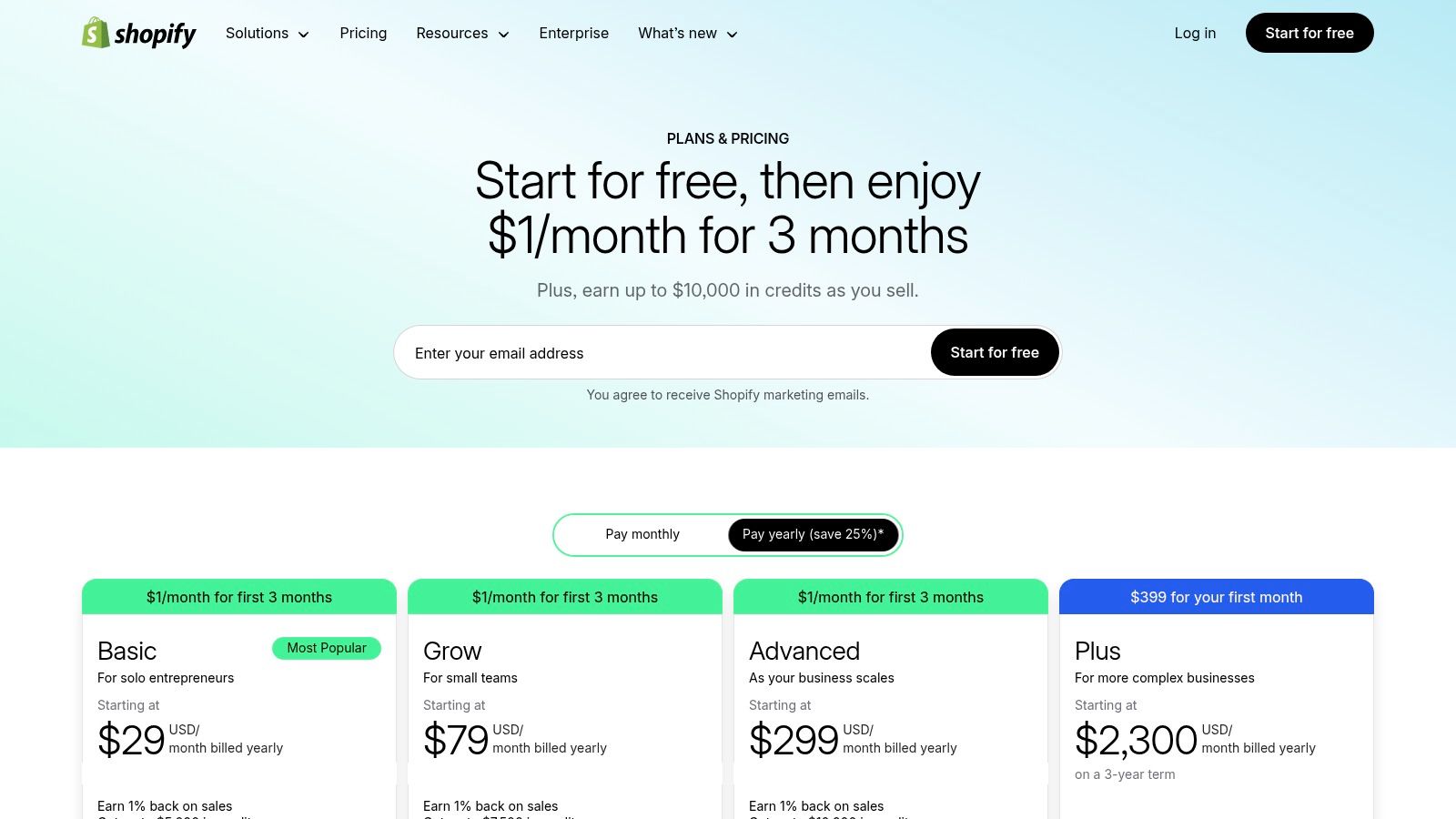
Shopify has cemented its position as a global leader, and arguably one of the best website builders for ecommerce, by offering a powerful, all-in-one platform designed for serious sellers. It provides a robust, cloud-hosted solution that combines a storefront, payment processing, and a sophisticated back-end into one cohesive system. This integrated approach allows businesses, from ambitious startups to high-volume brands, to manage products, inventory, and orders without needing deep technical knowledge.
Its core strength lies in its scalability and a vast ecosystem of over 8,000 apps. This allows you to add advanced functionality for everything from dropshipping and email marketing to sophisticated analytics and customer loyalty programmes as your business grows. For UK-based businesses, Shopify is particularly compelling, offering competitive GBP pricing, localised payment processing rates through Shopify Payments, and multi-location inventory management for seamless operations across different sites.
Key Features and Considerations
Shopify excels with its unified system. You can sell online, in-person with Shopify POS, and across social media channels, all while your inventory and sales data synchronise automatically. Features like abandoned cart recovery and detailed analytics are built-in, providing immediate tools to boost revenue.
However, business owners should budget for ongoing costs. While the core platform is comprehensive, many advanced features rely on paid monthly apps, and these costs can accumulate. Furthermore, if you choose not to use the native Shopify Payments gateway, you may incur additional transaction fees on top of your payment processor's charges on certain plans.
Pros:
Fast and Reliable: Excellent uptime and fast page loading speeds thanks to its robust infrastructure and global CDN.
Highly Scalable: Easily scales from a small startup to an enterprise-level operation with Shopify Plus.
Vast App Ecosystem: Unmatched library of apps and integrations to extend store functionality.
Strong UK Support: Competitive card rates and dedicated support for the UK market.
Cons:
App Costs: Monthly fees for essential apps can significantly increase your overall expenses.
Transaction Fees: Using third-party payment gateways can incur extra fees from Shopify.
If you're ready to build a scalable and powerful online store with Shopify but need expert assistance with design and setup, explore our professional Shopify services at Baslon Digital.
2. Wix
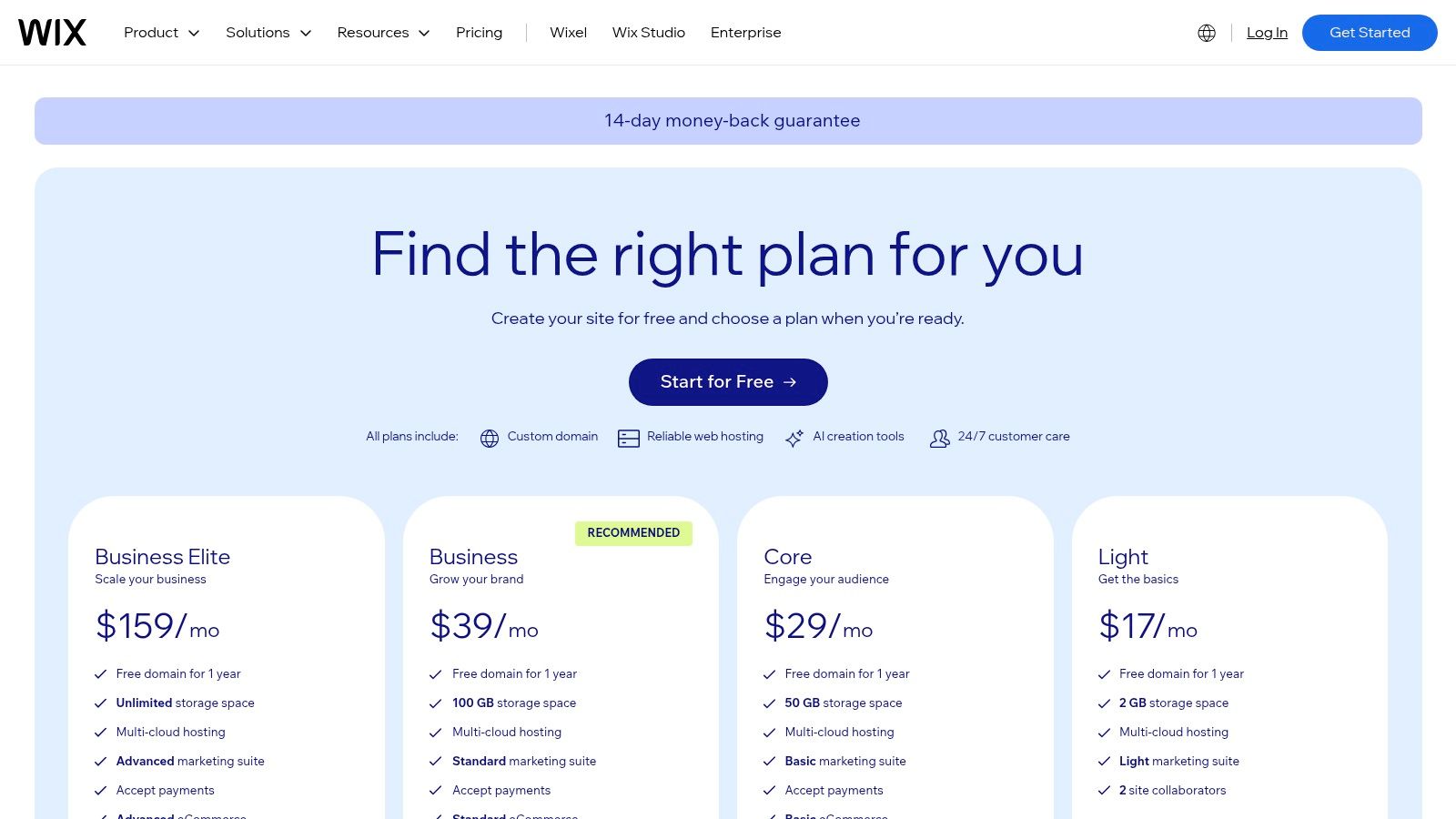
Wix has earned its reputation as one of the most versatile and user-friendly website builders, making it a strong contender for ecommerce, especially for small businesses, creative entrepreneurs, and startups. Its primary appeal lies in its powerful drag-and-drop editor, offering unparalleled design freedom without needing to write a single line of code. This flexibility allows merchants to create visually stunning, highly customised online storefronts that truly reflect their brand identity.
For businesses looking to get online quickly, Wix offers both a vast library of professionally designed templates and an AI-powered site generator (Wix ADI) that can build a functional store in minutes. The platform integrates its own Wix Stores app, providing a comprehensive suite of tools for managing products, accepting secure payments through Wix Payments and over 100 other gateways, and handling orders. This all-in-one approach simplifies the process, combining hosting, security, and sales tools into one manageable dashboard.
Key Features and Considerations
Wix provides an impressive array of built-in features, including bookings for service-based businesses, event management, and robust marketing tools. Its App Market extends functionality further, enabling easy integration for dropshipping, print-on-demand, and customer subscriptions. For those needing advanced capabilities, Wix Studio and its developer environment, Velo, open the door to deep customisation and complex web applications.
However, once you select a template and build your site, switching to a new one can be a significant undertaking, often requiring a complete rebuild. Additionally, the platform’s high degree of design flexibility means users should be mindful of optimising images and elements to maintain fast loading speeds, as heavy pages can impact site performance.
Pros:
Highly Flexible Design: The drag-and-drop editor provides complete creative control over your store's look and feel.
All-in-One Solution: Includes hosting, security, domains, and integrated marketing and payment tools.
Extensive Template Library: A wide selection of modern, mobile-responsive templates to get started quickly.
Large App Market: Easily add functionality for everything from loyalty programmes to advanced shipping rules.
Cons:
Template Switching: Changing your template after your site is live is difficult and often impractical.
Performance Optimisation: Heavy use of animations and high-resolution media can slow down page load times if not managed carefully.
If you’re looking to leverage Wix’s creative freedom for your ecommerce store, learn more about our expert Wix ecommerce design services at Baslon Digital.
3. Squarespace
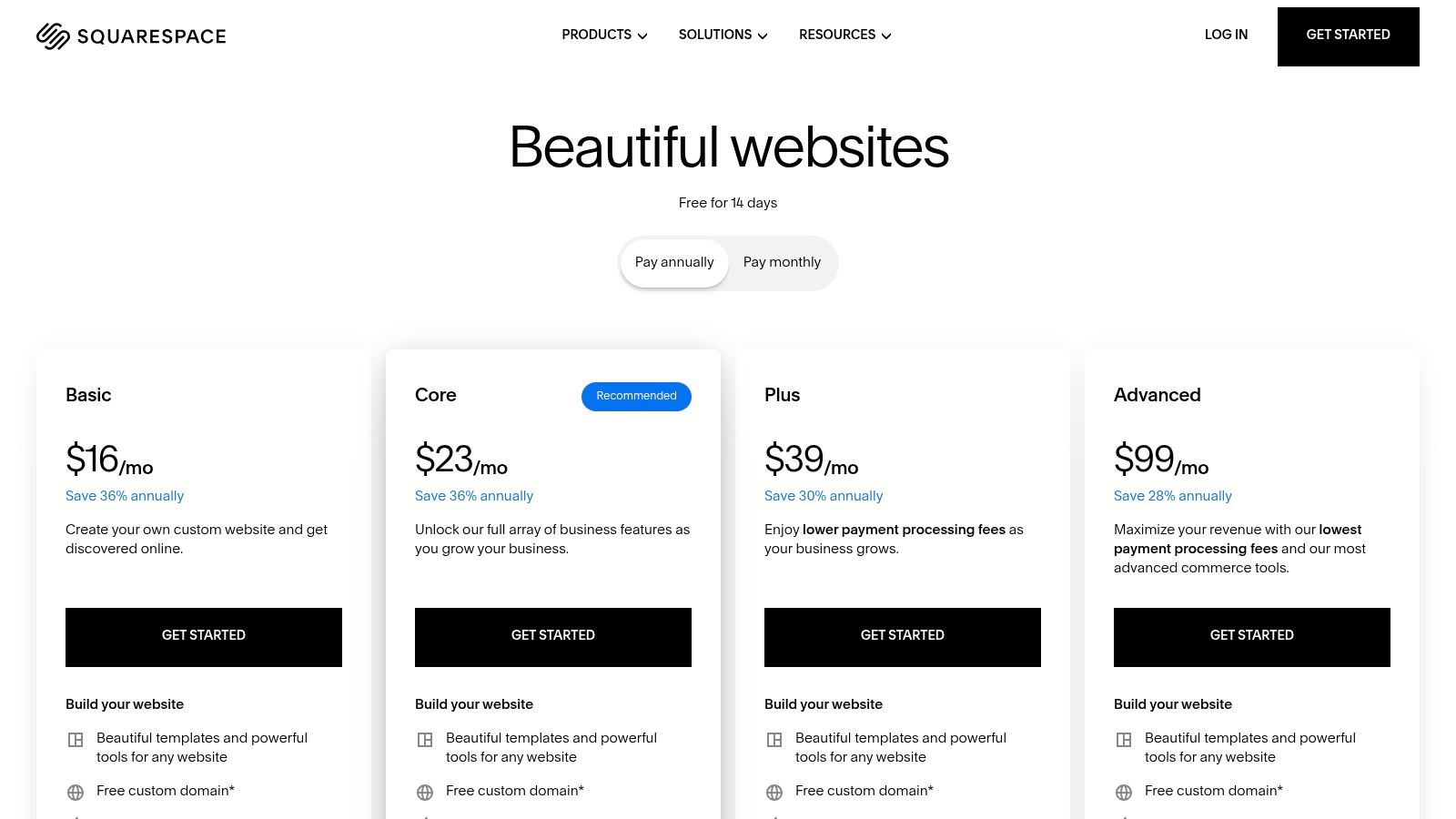
Squarespace has carved out a niche as one of the best website builders for ecommerce by prioritising impeccable design and user experience. It's an elegant, all-in-one platform ideal for creatives, brand-led small businesses, and entrepreneurs who value aesthetics as much as functionality. The platform bundles everything you need, from modern storefront templates and integrated payment processing to marketing tools, into a single, intuitive system. This makes it a fantastic choice for those wanting to sell physical goods, digital products, or even subscriptions without the complexity of managing multiple plugins.
Its primary strength is its seamless integration and sophisticated visual editor, which allows anyone to create a professional-looking store without writing a single line of code. For UK-based sellers, Squarespace provides strong support with localised payment options via Stripe, PayPal, and Apple Pay. Features like subscriptions, advanced discounts, and built-in email marketing campaigns on higher-tier plans provide a robust toolset for growing a brand-focused business.
Key Features and Considerations
Squarespace excels in offering a cohesive, curated experience. You can manage inventory, process orders, and run email campaigns from one dashboard. Integrated SEO tools and detailed analytics are built-in, helping you understand your audience and optimise your store's performance from day one.
While the platform is incredibly user-friendly, its curated nature means it is less extensible than competitors like Shopify or WooCommerce. The customisation options are powerful within the provided framework but lack the vast app marketplace for highly specific or niche functionalities. Business owners should also note that while advanced ecommerce features are excellent, they are often reserved for the higher-priced Commerce plans.
Pros:
Consistently Excellent Design: Award-winning templates and a superior user experience create beautiful, modern storefronts.
0% Platform Transaction Fees: Commerce plans have no additional transaction fees from Squarespace.
Simple, Predictable Setup: An all-in-one system that works out of the box without needing third-party plugins.
Cons:
Less Extensible: Limited integrations compared to platforms with large app stores.
Advanced Plan Pricing: The most powerful ecommerce features require a higher-tier subscription.
If you're looking to create a visually stunning online store with Squarespace but need guidance, consider scheduling a free consultation to discuss our Squarespace design services at Baslon Digital.
4. BigCommerce
BigCommerce positions itself as a powerful SaaS platform for growing brands, making it one of the best website builders for ecommerce by focusing on scalability and flexibility. It provides a robust, all-in-one solution that bundles hosting, a storefront builder, and powerful back-end features. This platform is particularly well-suited for businesses looking to expand into multi-channel selling and headless commerce without incurring platform-level transaction fees, a key differentiator from some competitors.
Its core advantage lies in its built-in feature set and strong API capabilities. Unlike platforms that rely heavily on third-party apps for core functionality, BigCommerce includes many advanced tools out of the box, such as multi-currency support, single-page checkout, and powerful B2B features. For UK businesses, this means you can manage complex operations and sell across marketplaces and social channels natively, providing a streamlined foundation for growth.
Key Features and Considerations
BigCommerce excels with its transparent pricing structure, offering unlimited products, storage, and bandwidth with zero platform transaction fees on all plans. This makes financial planning more predictable as your sales volume increases. The platform’s strong API and headless support also give developers the freedom to build highly customised, high-performance shopping experiences on any front-end framework.
However, businesses should be aware of the revenue-based plan structure. As your annual online sales grow, BigCommerce will automatically upgrade your account to the next pricing tier, which can lead to unexpected cost increases. Additionally, while its native feature set is strong, its app marketplace is smaller and less extensive than Shopify’s, which might limit some niche customisation options.
Pros:
No Platform Transaction Fees: Keep more of your revenue without being penalised for using your preferred payment gateway.
Strong Built-in Features: Excellent native tools for multi-channel selling, SEO, and conversions.
Highly Scalable Architecture: Strong APIs and headless capabilities support complex, custom ecommerce builds.
24/7 Support: Comprehensive phone, email, and live chat support is available on all plans.
Cons:
Forced Plan Upgrades: Your monthly plan cost automatically increases as you hit specific revenue thresholds.
Smaller App Ecosystem: The selection of third-party apps and integrations is less extensive than some rivals.
If you’re considering BigCommerce for its powerful native features but need help with a custom design or migration, contact Baslon Digital to discuss how our expert web development services can build the perfect store for you.
5. WooCommerce
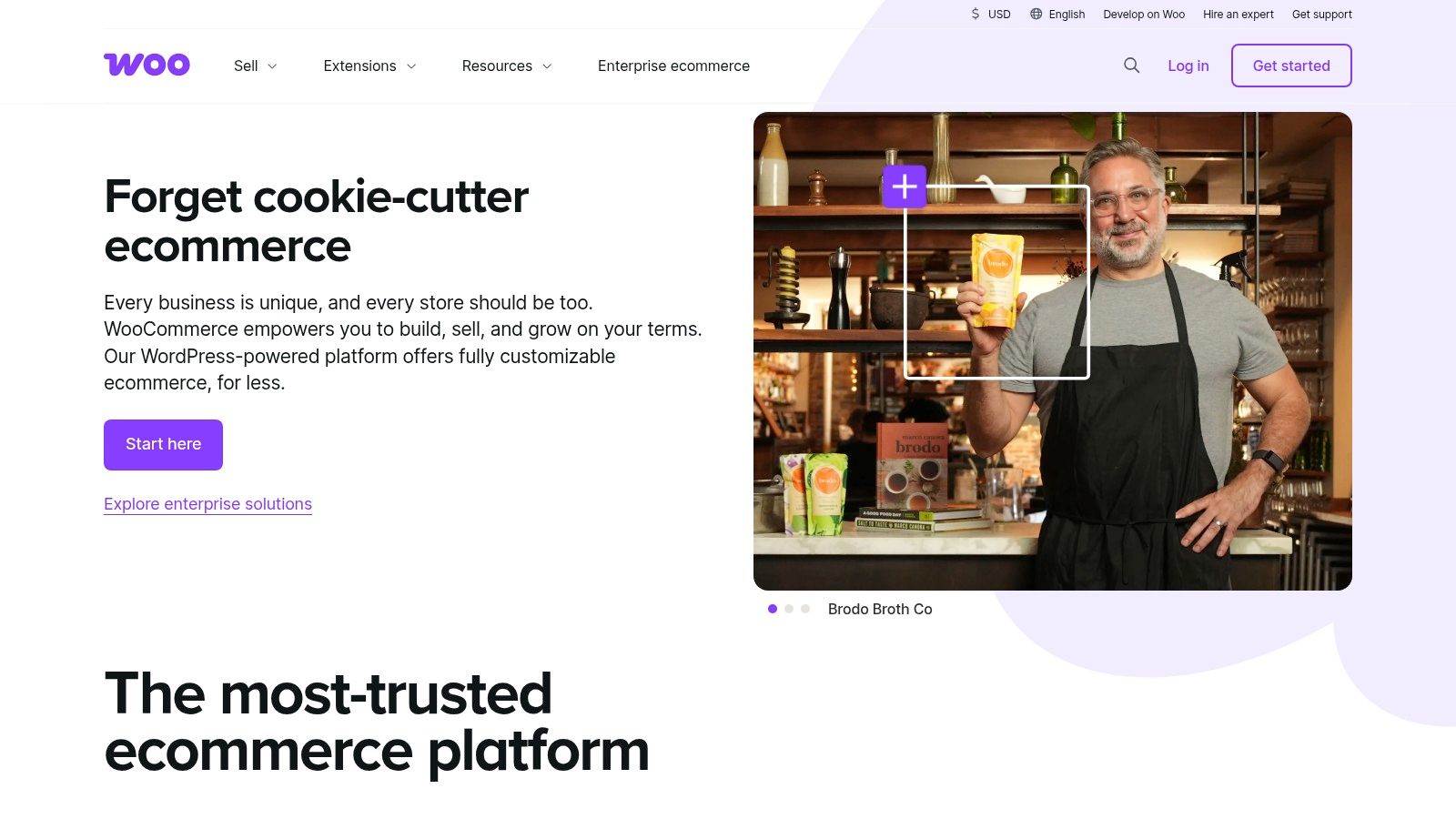
For those who already have a WordPress site or want complete creative control, WooCommerce stands out as a powerful and flexible open-source solution. Rather than being a standalone platform, it's a free plugin that transforms any WordPress website into a fully functional online store. This approach grants users unparalleled customisation, allowing them to own their data, choose their hosting, and modify every aspect of their site's code.
This makes it an excellent choice for UK businesses with specific requirements, as you can integrate virtually any local payment gateway or shipping provider. Its core strength lies in its limitless potential for tailoring the user experience, from product displays to the checkout process, making it one of the most adaptable, if not technically demanding, options for building an ecommerce website.
Key Features and Considerations
WooCommerce's main advantage is its extensibility. Through a vast marketplace of themes and extensions, you can add features for subscriptions, bookings, complex product variations, and more. When evaluating it, it's worth understanding WooCommerce's shipping functionalities and when specialized plugins become essential to handle specific logistical needs.
The trade-off for this flexibility is increased responsibility. Unlike hosted platforms, you are responsible for sourcing your own hosting, managing security updates, and performing maintenance. While the core plugin is free, the costs for premium hosting, themes, and necessary extensions can accumulate, potentially matching the monthly fees of a subscription-based builder.
Pros:
Maximum Flexibility and Ownership: Full control over your code, data, and hosting with no platform restrictions.
Huge Community and Vendor Ecosystem: Access to thousands of themes, plugins, and developers for support.
Can Be Cost-Effective at Small Scale: Low initial costs if you can manage the technical aspects yourself.
Cons:
You Must Manage Hosting, Updates, and Security: Requires more technical knowledge and time commitment.
Premium Extensions and Developer Time Can Add Up: Costs can escalate quickly for advanced features.
If the technical demands of a self-hosted platform seem daunting, Baslon Digital offers expert Wix-focused design and migration services to provide a powerful yet user-friendly alternative.
6. Square Online
Square Online emerges as one of the best website builders for ecommerce by offering an incredibly streamlined path for physical businesses to start selling online. It is uniquely positioned for UK retailers, cafes, and service providers already using Square's popular Point of Sale (POS) system. Its greatest strength is the seamless integration between in-person and online operations, creating a unified commerce ecosystem from a single provider.
The platform allows businesses to launch an online store for free, paying only transaction fees on sales. This low-friction entry point is perfect for those testing the waters of ecommerce. Inventory, sales, and customer data are automatically synchronised between your online store and your physical POS, eliminating manual data entry and preventing stock discrepancies. For UK businesses, this means transparent payment processing fees, easy setup for local click-and-collect or delivery services, and powerful tools like integrated invoicing and payment links.
Key Features and Considerations
Square Online's core value is its unified system. You can manage your entire business, from in-store payments to online orders and social media selling on Instagram, all within one dashboard. Features like appointment booking and automatic inventory syncing are designed specifically for service and retail businesses, making it a practical, purpose-built solution.
However, its simplicity comes with limitations. The storefront design options are more template-driven and less customisable than platforms like Wix or Shopify. While it covers the essentials well, businesses seeking highly advanced ecommerce features, such as complex product variants or extensive app integrations, may find the toolset restrictive as they scale.
Pros:
Seamless POS Integration: Unmatched synchronisation for businesses using Square for in-person sales.
Free to Start: Launch a functional online store with no monthly fees, only paying for payment processing.
Fast Onboarding: The fastest way for an existing Square user to begin selling online, with quick payouts.
Built for Local Commerce: Excellent built-in tools for local delivery, in-store pickup, and service appointments.
Cons:
Limited Design Flexibility: Customisation options are more basic compared to other leading builders.
Fewer Advanced Features: Lacks the depth of advanced ecommerce tools and the extensive app marketplace of competitors.
If you are a local business looking to expand online and need guidance on integrating your systems, the team at Baslon Digital can help you evaluate the best platform for your needs. Contact us today to discuss your project.
7. Ecwid by Lightspeed
Ecwid by Lightspeed offers a unique and flexible approach, positioning itself as an ecommerce solution that integrates into your existing online presence rather than replacing it. It's not a standalone website builder; instead, it provides a powerful "buy button" and storefront widget that you can add to any existing website, whether it’s built on WordPress, Wix, or a simple HTML page. This makes it an ideal choice for businesses that already have an established website and want to add selling capabilities without a complete platform migration.
Its core strength is its versatility and multi-channel focus. With Ecwid, you can synchronise your products and sell simultaneously across your website, social media platforms like Instagram and Facebook, and even major marketplaces like Amazon and eBay, all from one central dashboard. This centralised management simplifies operations for small business owners looking to expand their reach without multiplying their administrative workload. The platform is designed for ease of use, allowing you to get a store up and running in minutes.
Key Features and Considerations
Ecwid’s main draw is its seamless integration. You simply copy and paste a few lines of code to embed your store, and it automatically adapts to your existing site's design. The platform supports over 40 payment gateways, multilingual storefronts, and provides a mobile management app to run your business on the go. As you move to higher-tier plans, you unlock more advanced features like abandoned cart recovery, product subscriptions, and wholesale pricing groups.
However, because it's an add-on, its customisation potential is more limited than dedicated platforms like Shopify or BigCommerce. While you can tweak colours and layouts, deep structural changes to your checkout or product pages are not as straightforward. Furthermore, many of the most valuable features for growing a business are only available on the more expensive monthly plans, which is a key consideration for budget-conscious sellers.
Pros:
Minimal Setup: Works with your existing website, blog, or social page with no need to migrate.
Multi-Channel Selling: Easily sync and sell products across social media and online marketplaces.
User-Friendly: Very easy to set up and manage, even for complete beginners.
Good for Social-First Sellers: Strong integrations with Instagram and Facebook make it great for social commerce.
Cons:
Limited Customisation: Less control over design and functionality compared to full ecommerce platforms.
Gated Features: Key tools like abandoned cart recovery are restricted to higher-priced plans.
If you’re looking to add ecommerce to your existing Wix site, our team at Baslon Digital can help you integrate Ecwid or explore native Wix solutions to find the perfect fit.
8. Webflow Ecommerce
Webflow Ecommerce carves out a unique niche for itself, targeting designers, developers, and brands that refuse to compromise on customisation. It's less of a drag-and-drop builder and more of a visual development platform, offering unparalleled control over front-end design without needing to write code from scratch. This approach is perfect for businesses aiming to create a truly bespoke, pixel-perfect brand experience that stands out in a crowded market.
It translates the power of CSS grid, flexbox, and advanced animations into an intuitive visual interface, giving you complete creative freedom. The platform outputs clean, semantic code, ensuring high performance and SEO-friendliness. For UK brands focused on a unique digital presence, Webflow provides the tools to build an ecommerce site that feels handcrafted and premium, complete with a powerful, integrated CMS for content-rich shopping experiences.

Key Features and Considerations
Webflow’s core strength is its design engine. You can create custom ecommerce elements, from product grids to checkout flows, that perfectly match your brand identity. It supports payments through Stripe and PayPal, offers automatic tax calculations, and integrates with major shipping carriers. Its strong CMS capabilities also allow you to seamlessly blend content and commerce, ideal for editorial-driven brands.
However, this level of control comes with a steeper learning curve compared to traditional builders like Wix or Shopify. While you don't need to be a developer, a solid understanding of web design principles is essential to leverage its full potential. The ecommerce plans can also become more expensive as your business scales, particularly for higher-volume stores.
Pros:
Unmatched Design Flexibility: Total control over every element for a truly bespoke storefront.
Clean Code Output: Generates high-quality, semantic HTML and CSS for excellent performance and SEO.
Powerful CMS Integration: Perfect for combining rich content with commerce.
Highly Scalable Hosting: Built on a fast and reliable global infrastructure.
Cons:
Steeper Learning Curve: Requires more design knowledge than simpler platforms.
Higher Costs at Scale: Ecommerce plans can be more expensive than some competitors.
If the idea of a custom-designed store is appealing but you're unsure where to start, our design experts at Baslon Digital can help bring your vision to life. Contact us to discuss your project.
9. EKM
EKM carves out its niche as one of the best website builders for ecommerce by focusing exclusively on the UK market. It offers a fully managed service that goes beyond a simple DIY platform, providing businesses with a dedicated UK-based Account Manager. This hands-on approach is designed for merchants who value proactive support, strategic guidance, and a solution built from the ground up to meet the specific demands of selling in the United Kingdom.
The platform’s core strength is its all-inclusive, service-led model. Instead of leaving you to figure things out, the EKM team provides ongoing site reviews and optimisation advice to help you grow. Features like unlimited products, UK hosting, and integrated payment systems such as EKMPay are all included. This makes it an excellent choice for UK business owners who want a partner in their ecommerce journey, not just a piece of software.
Key Features and Considerations
EKM’s standout feature is the dedicated support. Every user on a standard plan or higher gets their own Account Manager, offering tailored advice on everything from SEO to conversion rate optimisation. The platform also includes robust integrations with major UK couriers and marketplaces like Amazon and eBay, simplifying multi-channel selling for British businesses.
While the high-touch support is a significant advantage, this service-oriented model comes at a higher monthly cost compared to purely DIY platforms. The app ecosystem is also more curated and smaller than global giants like Shopify, which might limit options for highly specialised or niche functionalities. It is best suited for businesses that prioritise expert guidance over endless customisation options.
Pros:
High-Touch Support: A dedicated, UK-based manager provides proactive, expert guidance.
UK-Specific Focus: Optimised for British sellers with local hosting, support, and integrations.
All-in-One Package: Reduces the need for multiple paid apps for core ecommerce functions.
Unlimited Products: No caps on the number of products you can list, even on the basic plan.
Cons:
Higher Monthly Fee: The managed service model results in a higher starting price point.
Smaller App Ecosystem: Fewer third-party apps compared to larger, global platforms.
If you're evaluating platforms like EKM but find your needs align more with a highly customisable solution like Wix, our Wix design and development services at Baslon Digital can help you build the perfect store from the ground up.
10. IONOS Online Store
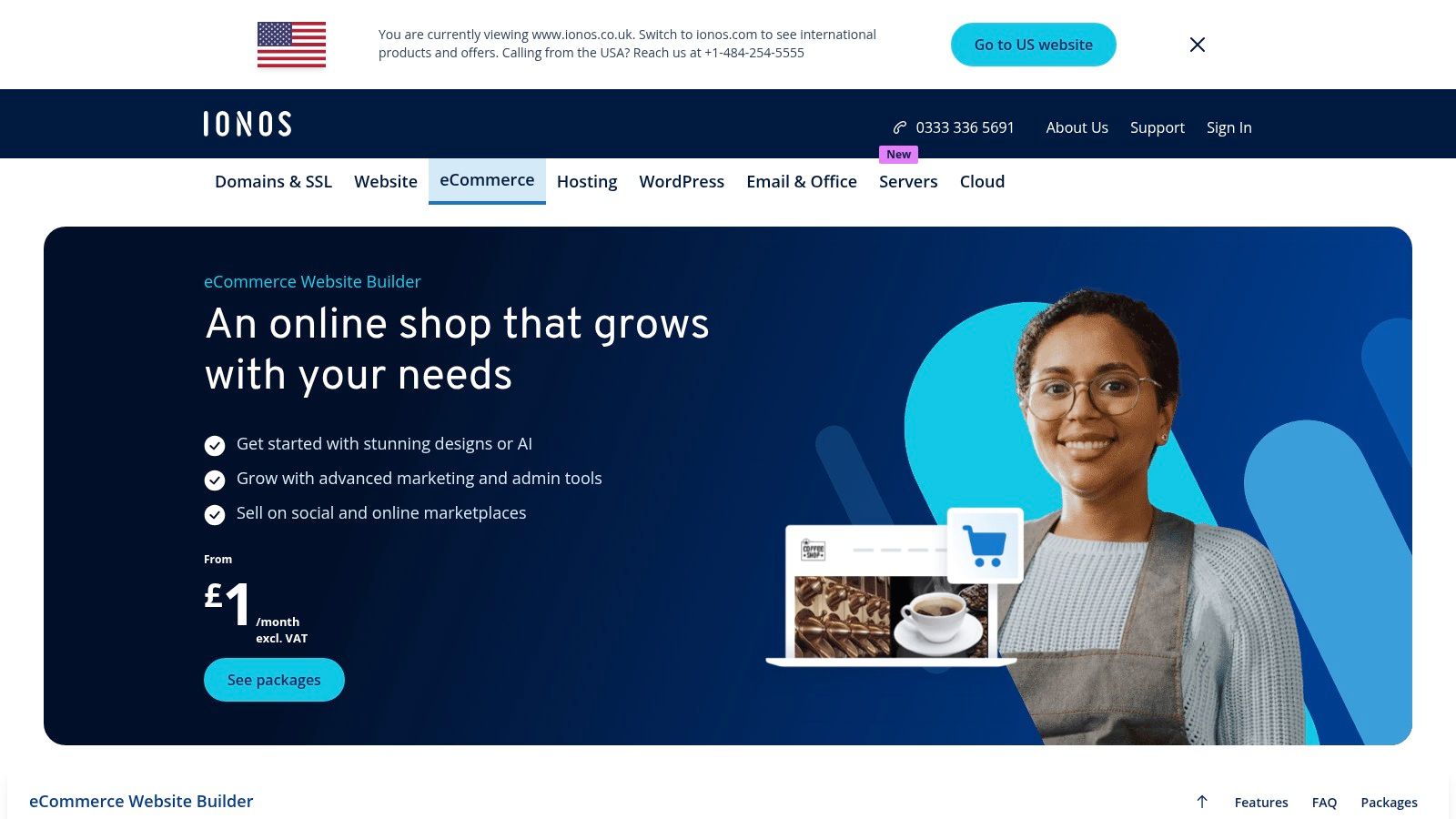
IONOS positions itself as one of the best website builders for ecommerce by targeting cost-conscious small businesses and sole traders entering the online market for the first time. It provides an accessible, all-in-one package that bundles a storefront, a free domain for the first year, and a professional email address into a single, low-cost monthly plan. This simplified approach is designed to remove the initial technical and financial barriers that often prevent new ventures from getting started.
Its main appeal lies in its extremely competitive introductory pricing and straightforward setup, which includes an AI-assisted site generator. For UK-based startups, this means you can establish a professional online presence and start selling with minimal upfront investment. IONOS handles the core technical aspects, allowing you to focus on product listings and marketing without needing to piece together different services.
Key Features and Considerations
IONOS simplifies the path to selling by integrating payments, shipping options, and the ability to sell across social media and popular marketplaces directly from its dashboard. Features like 24/7 support, often with a dedicated personal consultant, provide a valuable safety net for those who are not technically savvy.
However, business owners should be aware of the pricing structure. The attractive initial prices increase upon renewal, so it's crucial to factor in the standard rate for long-term budgeting. While the platform is user-friendly, its design flexibility and third-party app ecosystem are more limited compared to platforms like Wix or Shopify, potentially restricting customisation as your business needs evolve.
Pros:
Very Competitive Pricing: Extremely low introductory offers in GBP make it affordable to launch.
Simple Bundles: Including a domain, SSL, and email address lowers startup complexity.
No Platform Transaction Fees: You only pay standard fees from your chosen payment processor.
Cons:
Higher Renewal Prices: Costs increase significantly after the initial promotional period ends.
Limited Customisation: The design flexibility and app library are less extensive than major competitors.
If you're starting out and considering a user-friendly platform like IONOS but anticipate needing more design freedom, our Wix design services at Baslon Digital can help you build a store with greater creative control.
11. GoDaddy Online Store
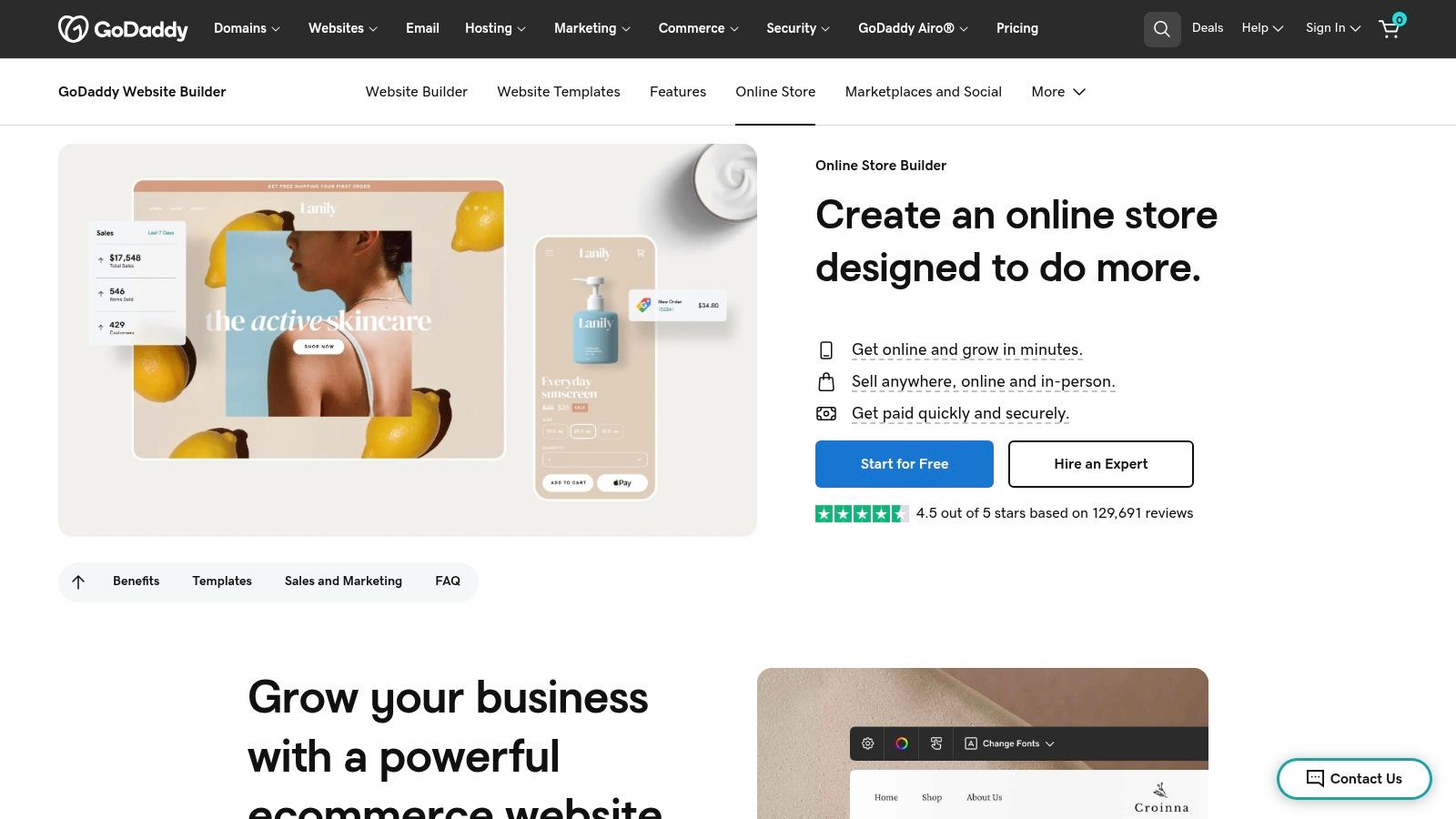
GoDaddy Online Store is primarily known as a domain registrar, but it also offers a straightforward website builder with integrated ecommerce capabilities. It's designed for entrepreneurs and small businesses who prioritise simplicity and speed over deep customisation. The platform provides an all-in-one solution that bundles a website, marketing tools, and marketplace syncing, making it a solid choice for those launching their first online venture or managing a simple product catalogue.
Its main appeal lies in its ease of use. You can quickly build a clean, mobile-responsive store using pre-built templates and then manage everything from one dashboard. It includes built-in email marketing and social media posting tools, alongside integrations to sell on major marketplaces like Amazon and eBay. For UK users, GoDaddy offers a simple, unified system for domains, hosting, and sales, streamlining the technical side of getting a business online.
Key Features and Considerations
GoDaddy’s platform integrates everything you need to start selling quickly. You can get a domain, build the site, and start taking payments through GoDaddy Payments with minimal setup. The builder also allows you to try it for free and only requires payment when you're ready to start accepting orders, which lowers the initial barrier to entry.
However, its simplicity comes with limitations. Compared to more specialised platforms like Shopify or WooCommerce, GoDaddy offers less ecommerce depth. Advanced features, checkout customisation, and the range of third-party integrations are more basic, which may restrict businesses as they begin to scale. It is one of the best website builders for ecommerce if your needs are simple and your focus is on a quick, easy launch.
Pros:
Easy Onboarding: Extremely user-friendly interface and fast setup process.
All-in-One Solution: Bundles domains, hosting, security, and marketing tools.
Affordable Entry: Competitive pricing makes it accessible for new businesses.
Marketplace Selling: Built-in tools to sync and sell on Amazon and eBay.
Cons:
Basic Ecommerce Features: Lacks the advanced inventory and shipping tools of competitors.
Limited Customisation: Fewer design options and less control over the checkout process.
If you’re starting with a simple online store but have plans to grow into a more customised platform like Wix, our team at Baslon Digital can help with expert migration and design services when you're ready to scale.
12. Hostinger Website Builder
Hostinger Website Builder emerges as a strong contender for entrepreneurs and small businesses prioritising budget and simplicity. It integrates a user-friendly, AI-assisted website builder directly into its hosting packages, offering a streamlined, all-in-one solution. This approach is ideal for those launching their first online shop who want a domain, hosting, email, and storefront bundled into one low-cost, easy-to-manage package.
The platform's main appeal lies in its affordability and ease of use. For UK businesses, the introductory GBP pricing is exceptionally competitive, making it one of the most accessible entry points into ecommerce. Its Business plan unlocks the ability to sell up to 500 products, and the platform charges zero transaction fees, meaning you only pay the standard rates from your chosen payment processor. The AI tools for logo creation, text generation, and SEO can also significantly speed up the initial setup process for beginners.
Key Features and Considerations
Hostinger excels at bundling essential services. A free domain for the first year, unlimited free SSL certificates, and free email accounts are included, removing many of the separate costs associated with starting a new site. The builder also supports over 20 payment options and offers a native integration with Printful for print-on-demand businesses.
However, its ecommerce functionality is more basic than dedicated platforms like Shopify or BigCommerce. While perfectly adequate for a small product catalogue, it lacks advanced features like multi-location inventory, sophisticated abandoned cart recovery, or a vast app marketplace for custom functionality. Business owners should also be aware that the low introductory prices require a long-term commitment, and renewal rates are substantially higher.
Pros:
Extremely Low Introductory Pricing: Very affordable entry point, especially with long-term plans.
Simple, Bundled Setup: Includes hosting, domain, SSL, and email in one package for straightforward management.
Zero Platform Transaction Fees: You keep more of your revenue, only paying standard processor fees.
Helpful AI Tools: AI assistants for content, logos, and SEO speed up the building process for novices.
Cons:
Price Increases on Renewal: Promotional prices are temporary and renewal rates are significantly higher.
Fewer Advanced Ecommerce Features: Lacks the depth of dedicated platforms for scaling businesses.
Limited App Integrations: Not as extensible as platforms with large app marketplaces.
If you’re starting out and need a simple, cost-effective solution, Hostinger is a great choice. For more advanced features or help migrating to a more robust platform like Wix, consider the expert services at Baslon Digital.
Top 12 Ecommerce Website Builders Comparison
Platform | Best for 👥 | Core features ✨ | Quality / UX ★ | Value & Pricing 💰🏆 |
|---|---|---|---|---|
Shopify | Startups → high‑volume brands 👥 | Hosted store, POS, 8,000+ apps, multi‑currency ✨ | ★★★★★ | 💰 Mid–High; apps can add costs. 🏆 Scalability & ecosystem |
Wix | Small businesses & solo founders 👥 | Drag‑and‑drop + AI, Wix Stores, payments, app market ✨ | ★★★★☆ | 💰 Affordable all‑in‑one; watch page performance. 🏆 Design flexibility |
Squarespace | Creatives & brand‑led SMBs 👥 | Elegant templates, integrated commerce, email & SEO ✨ | ★★★★★ | 💰 Higher price but predictable; 0% platform fees on commerce. 🏆 Design & UX |
BigCommerce | Growing/B2B brands needing scale 👥 | Unlimited products, headless & APIs, no platform fees ✨ | ★★★★☆ | 💰 Mid–High; scales w/o many paid apps. 🏆 B2B & headless features |
WooCommerce | Developers & full‑control owners 👥 | Open‑source WP plugin, full customisation & extensions ✨ | ★★★★☆ | 💰 Low core cost; hosting/dev add up. 🏆 Ownership & flexibility |
Square Online | POS‑first retailers & local stores 👥 | Free start, unified inventory, local pickup, social selling ✨ | ★★★★☆ | 💰 Free‑to‑start; pay processing fees. 🏆 Tight POS integration |
Ecwid by Lightspeed | Add ecommerce to existing sites 👥 | Embeddable store, social/marketplace sync, multilingual ✨ | ★★★★☆ | 💰 Good value for embed; advanced features on higher plans. 🏆 Embeddable simplicity |
Webflow Ecommerce | Design teams & bespoke brands 👥 | Visual dev, custom CMS, animations, headless options ✨ | ★★★★☆ | 💰 Higher plan costs; designer‑grade output. 🏆 Pixel‑perfect control |
EKM | UK merchants wanting hands‑on support 👥 | UK hosting, dedicated Ecommerce Manager, marketplace links ✨ | ★★★★☆ | 💰 Higher monthly fee; managed optimisation included. 🏆 UK‑focused support |
IONOS Online Store | Cost‑conscious small businesses 👥 | AI setup, bundled domain/email, payments & shipping ✨ | ★★★☆☆ | 💰 Very low intro pricing; renewals rise. 🏆 Bundled domain & email |
GoDaddy Online Store | Quick launches & simple catalogues 👥 | Templates, SEO & marketing, marketplace sync ✨ | ★★★☆☆ | 💰 Affordable entry; basic ecommerce depth. 🏆 Ease of setup |
Hostinger Website Builder | Budget launches & micro‑shops 👥 | AI site tools, ecommerce on Business plan, bundled hosting ✨ | ★★★☆☆ | 💰 Extremely low intro pricing; promo terms long. 🏆 Budget bundles and hosting |
Ready to Build Your Perfect Online Store?
Navigating the crowded landscape of the best website builders for ecommerce can feel overwhelming, but making an informed choice is the most critical first step towards digital success. Throughout this guide, we've dissected twelve of the market's leading platforms, moving beyond surface-level features to give you a clear picture of how each tool performs in the real world. From powerhouse platforms to niche specialists, the right solution for your business is on this list.
The key takeaway is that there is no single "best" platform for everyone. The ideal choice is deeply personal, hinging on your specific business model, technical comfort level, budget, and long-term ambitions. Your decision-making process should be a strategic reflection of your unique needs.
Recapping the Top Contenders
Let's quickly synthesise our findings to help you pinpoint your ideal match:
For Unmatched Scalability: Shopify and BigCommerce are the undisputed leaders for businesses with serious growth ambitions. They offer robust, enterprise-grade features straight out of the box, designed to handle high-volume sales and complex inventories without compromising performance.
For Creative Freedom & Flexibility: Wix and Squarespace are perfect for brand-focused entrepreneurs who prioritise stunning design and user experience. Their intuitive drag-and-drop editors empower you to build a beautiful, unique storefront without needing to write a single line of code.
For Ultimate Control & Customisation: For those with a bit more technical confidence, WooCommerce (paired with WordPress) offers unparalleled control. Its open-source nature means the customisation possibilities are virtually limitless, allowing you to build a truly bespoke ecommerce experience.
For Simplicity & Speed to Market: Platforms like Square Online, Ecwid, and GoDaddy Online Store excel at getting you selling quickly. They are fantastic choices for small businesses, local shops, or anyone who needs to integrate online sales into an existing physical business with minimal fuss.
Your Action Plan for Choosing the Right Builder
Feeling informed is one thing; taking action is another. It's time to move from analysis to decision. We recommend a structured approach to ensure you select a platform that will serve you well for years to come.
Define Your Core Needs: Before you even look at pricing pages, list your non-negotiables. Do you need multi-channel selling capabilities? Advanced product variant options? Specific payment gateway integrations? A clear list will immediately help you narrow down the options.
Assess Your Technical Skills Honestly: Be realistic about the time and expertise you can dedicate to building and maintaining your site. If you're a solo entrepreneur focused on product and marketing, a fully hosted, user-friendly platform like Wix or Shopify is likely a wiser choice than a self-hosted solution like WooCommerce.
Project Your Future Growth: Think about where you want your business to be in three to five years. The platform that's perfect for a startup launching with ten products might struggle to support an international operation with a catalogue of a thousand. Choose a builder that can grow with you to avoid a costly and complicated migration down the line.
Utilise Free Trials: This is the most crucial step. Shortlist your top two or three contenders and take full advantage of their free trial periods. This hands-on experience is invaluable. Test the dashboard, add a few sample products, and see how intuitive the day-to-day management feels. This practical test drive will reveal more than any review ever could.
Choosing from the best website builders for ecommerce is more than a technical decision; it's a strategic partnership. You are selecting the foundation upon which your digital brand will be built, customers will be served, and revenue will be generated. By carefully considering your unique requirements and leveraging the insights from this guide, you can confidently select the platform that will not only launch your online store but also propel it towards sustainable success in the dynamic UK market.
Feeling drawn to the powerful design flexibility of Wix but want a professional, results-driven website without the steep learning curve? At Baslon Digital, we specialise in crafting bespoke Wix ecommerce sites that captivate customers and drive sales. Let our London-based experts handle the technical build, so you can focus on what you do best: running your business.
Comments