Design Brief Examples: Real-World Templates design brief examples

Every successful design project, from a sleek logo refresh to a complex website rebuild, begins not with a sketch, but with a document. This is the design brief, and it serves as the foundational blueprint that aligns client vision with creative execution. A well-crafted brief is the single most effective tool for preventing costly misunderstandings, scope creep, and misaligned outcomes, ensuring the final product truly solves the intended problem.
Yet, translating a great idea into a clear, comprehensive brief is often where projects first stumble. Without a solid framework, vital details get lost, objectives become muddled, and expectations diverge. This is why looking at high-quality design brief examples is so critical for learning what works. It provides a tangible guide to structure your own thinking and communication.
This article moves beyond theory to provide a practical, hands-on resource. We will dissect 10 real-world design brief examples, covering projects from brand identity and packaging to UX research and mobile app development. For each example, we will break down its strategic core, highlight actionable takeaways, and provide a downloadable template you can adapt for your own needs. You'll learn not just what to include, but why each component matters for achieving project success. Let's dive in and master the art of the perfect design brief.
1. The Comprehensive Wix Website Redesign Brief
Redesigning a website on a user-friendly platform like Wix requires a brief that is both detailed and platform-aware. This example is tailored for a small business aiming to transform its digital presence from a simple online brochure into a high-performing marketing asset. It moves beyond aesthetics, prioritising enhanced SEO, streamlined user journeys, and higher conversion rates.
This brief stands out because it precisely defines success within the Wix ecosystem. It outlines specific goals like improving mobile responsiveness using Wix’s built-in editor and integrating Velo by Wix for custom functionalities. By being so specific, it prevents scope creep and ensures the final product leverages the platform's strengths effectively.
Strategic Breakdown
What makes this one of the most effective design brief examples is its focus on tangible business outcomes, not just visual updates.
Objective Clarity: The brief links every design request to a measurable goal. For instance, "redesign the homepage" is tied to a Key Performance Indicator (KPI) like "decrease bounce rate by 15%".
Target Audience Deep Dive: It includes detailed user personas, guiding the designer to create an experience that truly resonates with the client's ideal customer, from navigation structure to the tone of voice in the copy.
Technical & SEO Scoping: It explicitly lists technical requirements, such as setting up 301 redirects for old pages and optimising on-page SEO elements like meta titles and descriptions directly within the Wix dashboard.
Key Takeaway: A strong Wix redesign brief translates broad business goals into specific, platform-relevant tasks. It equips the designer with the context needed to make strategic decisions that drive real results, ensuring the project delivers a strong return on investment.
Ready to start your own redesign project? Download our customisable design brief template to ensure your vision is communicated clearly from day one.
2. The Strategic Website Redesign Brief
A website redesign brief is a critical document for any business looking to overhaul its online presence. It goes beyond a simple facelift, focusing on enhancing user experience (UX), modernising the look and feel, and boosting SEO performance to align with current web standards. This example is for a company aiming to pivot from an outdated site to a lead-generation powerhouse.
This brief is effective because it’s rooted in data and strategic goals, not just aesthetic preferences. It details a plan to improve key performance metrics by analysing existing user behaviour and competitor landscapes. For instance, it might specify goals like improving mobile navigation based on heat-mapping data or rebuilding the service pages to target higher-value keywords, ensuring the redesign is a strategic investment.
Strategic Breakdown
What elevates this into one of the best design brief examples is its emphasis on an evidence-based approach to drive business growth.
Objective Clarity: The brief directly links redesign tasks to measurable business objectives. For example, "overhaul the user navigation" is connected to a specific KPI like "increase pages per session by 25% and reduce user journey friction".
Target Audience Deep Dive: It includes insights from current analytics and user testing. This guides the designer to solve real-world usability problems and create a more intuitive experience for the actual, not just assumed, audience.
Technical & SEO Scoping: It outlines crucial technical requirements, such as a content migration plan, a strategy for preserving SEO authority through redirects, and implementing robust analytics tracking from day one to measure the redesign's impact.
Key Takeaway: An impactful website redesign brief uses data to inform design decisions. It clearly articulates the "why" behind every change, ensuring the project focuses on improving performance and delivering a measurable return on investment.
Planning a website overhaul? Download our comprehensive design brief template to ensure your redesign project is built on a solid strategic foundation.
3. The Standout Packaging Design Brief
Creating product packaging requires a specialised brief that balances aesthetics, brand identity, regulatory compliance, and practical functionality. This example is tailored for a product destined for both retail shelves and e-commerce, where it must grab attention, protect the contents, and communicate brand value instantly. It moves beyond just a "pretty box" to address the entire customer experience, from unboxing to disposal.
This brief excels because it considers the entire lifecycle of the package. It specifies materials, die-lines, and printing techniques while also outlining mandatory information like barcodes, nutritional facts, or compliance symbols. By being meticulous, it helps designers navigate complex constraints and avoids costly production errors.
Strategic Breakdown
What makes this one of the most effective design brief examples is its integration of marketing goals with the physical realities of production and logistics.
Holistic Experience Focus: The brief frames the task not just as designing a container, but as creating the "first physical touchpoint" with the customer. It might include goals like "create an Instagram-worthy unboxing experience".
Technical & Regulatory Precision: It details essential practicalities, such as specifying the exact Pantone colours for brand consistency, required packaging dimensions to minimise shipping costs, and a checklist of all legally required text and symbols.
Audience-Centric Approach: The brief identifies the target consumer and their values. For example, if the audience is eco-conscious, the brief will prioritise sustainable, recyclable, or compostable materials and instruct the designer to highlight these features.
Key Takeaway: An exceptional packaging design brief is a technical guide as much as a creative one. It provides the designer with a clear framework of constraints and objectives, ensuring the final product is beautiful, compliant, functional, and aligned with core business goals.
Need to create packaging that pops? Download our detailed packaging design brief template to ensure your product makes a brilliant first impression.
4. User Interface (UI) Design Brief
A UI design brief focuses on the visual and interactive elements of a digital product, such as an app or a website. This type of brief is less about overall business strategy and more about creating a cohesive, usable, and aesthetically pleasing interface. It serves as the blueprint for the look, feel, and interactivity of every component, from buttons and forms to menus and modals.
This brief is crucial for establishing visual consistency and a seamless user experience, especially in complex products. It details everything from colour palettes and typography to component states (like hover, active, and disabled). For example, it would define how a primary call-to-action button should appear across all pages, ensuring a predictable and intuitive interface for users.
Strategic Breakdown
What makes this one of the most effective design brief examples is its meticulous focus on creating a scalable and consistent visual language.
Component-Based Approach: The brief adopts an atomic design methodology, breaking the interface down into its smallest components (atoms), which are then combined to form larger elements (molecules and organisms). This ensures every piece of the UI is deliberate and reusable.
Design System Foundation: It often serves as the initial document for building a comprehensive design system, like Google's Material Design or Shopify's Polaris. This system becomes the single source of truth for both designers and developers, speeding up workflow and reducing inconsistencies.
Accessibility First: A strong UI brief explicitly mandates adherence to accessibility standards (WCAG). It requires designers to define colour contrast ratios, focus states, and ARIA labels, ensuring the product is usable for everyone. Explore how to improve your web user interface for better engagement with these principles in mind.
Key Takeaway: A detailed UI design brief prevents visual chaos and technical debt. By documenting every component, interaction, and style rule, it empowers teams to build beautiful, consistent, and scalable digital products efficiently.
Ready to systematise your product's look and feel? Download our customisable design brief template to build a strong foundation for your user interface.
5. The Print Marketing Collateral Brief
In an increasingly digital world, a well-executed print marketing collateral brief ensures your physical brand touchpoints are cohesive, impactful, and perfectly aligned with your digital presence. This brief is for creating a suite of integrated print materials, from business cards and brochures to letterheads and promotional flyers, that consistently reinforce your brand identity. It focuses on the tactile experience of a brand, a crucial element often overlooked.
This brief excels by meticulously detailing print-specific requirements. It moves beyond just logo placement and colour codes, specifying paper stock, finishes (like matte or gloss), and printing techniques. For example, it might outline the need for die-cut business cards for a creative agency or embossed letterheads for a luxury brand, ensuring the final physical products communicate the intended brand quality and feel.
Strategic Breakdown
What makes this one of the most effective design brief examples is its emphasis on bridging the gap between digital identity and physical brand assets.
Tactile Brand Experience: The brief clearly articulates the desired sensory experience. It connects the choice of materials to brand values, for instance, using recycled, uncoated paper stock to communicate a commitment to sustainability.
Production-Ready Specifications: It includes technical details vital for printers, such as colour profiles (CMYK vs. Pantone), bleed and trim marks, and resolution requirements. This foresight prevents costly printing errors and production delays.
Integrated Campaign Focus: The brief ensures each piece of collateral, from a brochure to a trade show banner, works as part of a unified system. It often includes instructions for QR codes linking back to specific landing pages, creating a measurable link between print and digital marketing efforts.
Key Takeaway: A comprehensive print collateral brief treats physical materials as a critical component of the overall brand strategy. It provides the designer and the printer with the precise technical and creative specifications needed to produce items that are not just visually appealing but also tangibly on-brand.
Ready to create a standout set of marketing materials? Download our customisable design brief template to ensure your vision is translated perfectly from screen to print.
6. User Experience (UX) Research Brief
Before a single pixel is designed, a User Experience (UX) Research Brief lays the essential groundwork for creating a product that users will actually love and use. This document frames the "why" behind the design, outlining the questions that need answers, the user groups to study, and the methods for gathering insights. It guides teams to investigate user behaviours, pain points, and motivations, ensuring the final product solves real-world problems.
This brief is crucial because it shifts the project's focus from assumptions to evidence. It defines the scope of the investigation, from usability testing of a banking app to ethnographic studies on how teams at companies like Slack collaborate. By structuring the research plan, it prevents wasted effort and ensures the data collected is relevant, actionable, and directly informs design decisions, from information architecture to button placement.
Strategic Breakdown
What makes this one of the most effective design brief examples is its commitment to a user-centred process, building a foundation of empathy and data.
Problem-Framing: The brief starts by articulating the core problem or hypothesis. For instance, "We believe users abandon their shopping carts due to a complicated checkout process" sets a clear objective for the research.
Methodology & Participant Definition: It specifies the research methods to be used (e.g., user interviews, surveys, A/B tests) and provides detailed criteria for recruiting participants, ensuring the insights come from the correct target audience.
Success Metrics: It defines what a successful research outcome looks like. This could be "identify the top three friction points in the onboarding flow" or "validate the need for a new feature with an 80% user approval rating".
Key Takeaway: A robust UX research brief is a strategic tool that mitigates risk. It ensures that design and development resources are invested in building features that genuinely meet user needs, leading to higher adoption, satisfaction, and a better overall product. To dive deeper, explore these user experience design best practices.
Ready to ground your design process in real user data? Download our customisable research brief template to start your next project with clarity and confidence.
7. The Foundational Brand Identity Design Brief
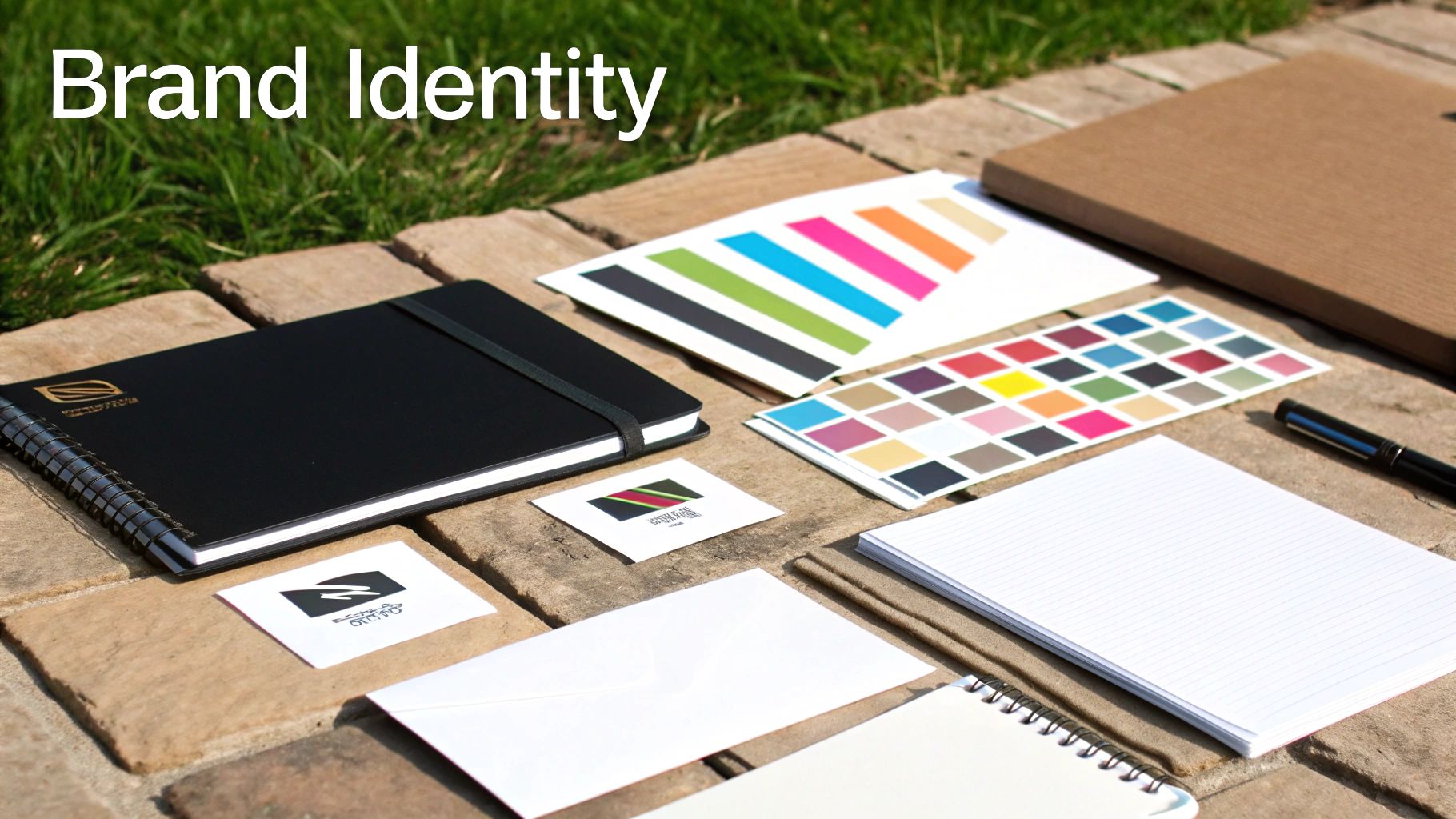
A brand identity design brief is the cornerstone for creating a cohesive and memorable brand. This document guides the creation of everything from the logo and colour palette to typography and brand voice. It's essential for new businesses establishing their presence or for existing companies undergoing a significant rebrand, like Mastercard's geometric logo modernisation.
This brief is powerful because it translates abstract brand values into tangible visual and verbal assets. It forces stakeholders to move beyond subjective preferences ("I like the colour blue") and make strategic decisions based on market position, target audience, and long-term business goals. A well-crafted brief ensures every design choice reinforces the brand's core message.
Strategic Breakdown
What elevates this into one of the most critical design brief examples is its emphasis on creating a comprehensive system, not just a single logo.
Values-Driven Direction: The brief starts with the 'why'. It defines the brand's mission, vision, and core values, which become the filter for all creative decisions, ensuring authenticity.
Competitive Landscape Analysis: It includes a thorough audit of competitors' branding. This helps identify opportunities to differentiate the brand visually and strategically within its market.
Application & Scalability Planning: A great brief anticipates future needs. It outlines all the key touchpoints where the brand identity will live, from social media profiles and business cards to packaging and signage, ensuring the final assets are versatile and scalable. If you're looking to master this foundational document, you can learn more about how to write a creative brief that works and sets your project up for success.
Key Takeaway: A comprehensive brand identity brief acts as a strategic blueprint. It aligns stakeholders and designers around a shared vision, preventing misinterpretations and ensuring the final identity is not only beautiful but also strategically sound and built to last.
Ready to define your brand's future? Download our customisable brand identity brief template to build a strong foundation for your visual identity.
8. Social Media Campaign Design Brief
A social media campaign requires more than just good graphics; it demands a brief that orchestrates a cohesive narrative across multiple platforms. This example is tailored for a brand aiming to launch a targeted campaign, moving beyond sporadic posts to a structured, engaging, and results-driven content strategy. It focuses on creating visual templates, a content calendar, and platform-specific optimisations for channels like Instagram, TikTok, and LinkedIn.
This brief excels because it forces a strategic approach to a notoriously fast-paced medium. It defines campaign-specific goals, such as boosting engagement for a product launch or building a community around a brand value. By detailing platform-specific requirements, like creating Reels templates for Instagram versus professional carousels for LinkedIn, it ensures every piece of content is purposeful and optimised for its environment.
Strategic Breakdown
What makes this stand out among design brief examples is its emphasis on building a holistic campaign ecosystem rather than just a set of disconnected assets.
Objective Clarity: The brief directly links creative assets to campaign KPIs. For example, "design Instagram Story templates" is tied to a goal like "increase Story replies and poll interactions by 25%".
Target Audience Deep Dive: It includes audience insights for each platform, acknowledging that the same user may behave differently on LinkedIn compared to TikTok. This guides the designer in tailoring the tone, visuals, and calls to action appropriately.
Technical & Platform Scoping: It explicitly outlines technical specifications, such as video aspect ratios for TikTok, character limits for Twitter, and the correct file formats for animated graphics. It also defines the scope of content pillars, like "Behind the Scenes," "User-Generated Content," and "Educational Tips."
Key Takeaway: A powerful social media campaign brief translates a central marketing message into a detailed, multi-platform execution plan. It provides the creative team with the strategic guardrails needed to produce content that is not only visually consistent but also drives meaningful engagement and achieves specific business objectives.
Ready to launch a campaign that captures attention? Download our customisable social media design brief template to align your creative team and achieve your goals.
9. The Environmental and Experiential Design Brief
Moving beyond the screen, an environmental or experiential design brief focuses on creating immersive physical spaces. This document is crucial for projects like retail environments, exhibition stands, and brand activations, where the goal is to forge a tangible connection between a brand and its audience. It translates brand identity into a three-dimensional, multi-sensory experience that guides visitor behaviour and evokes specific emotions.
This brief is essential because it aligns architectural planning with brand storytelling. It considers everything from the visitor’s journey and flow through the space to the materials, lighting, and interactive elements used. For projects involving physical goods, a thorough design brief for defining your packaging products is paramount to ensuring brand consistency from shelf to spatial experience.
Strategic Breakdown
What makes this one of the most effective design brief examples is its emphasis on the visitor’s emotional and physical journey, not just the space’s appearance.
Objective Clarity: The brief links spatial design choices to clear business objectives. For instance, a goal like "increase dwell time in-store" is supported by specific strategies such as creating interactive product displays or a comfortable seating area.
Visitor Journey Mapping: It meticulously outlines the intended visitor flow, from entry to exit. This includes identifying key touchpoints, potential bottlenecks, and “Instagrammable moments” designed to encourage social sharing and amplify the event's reach.
Sensory & Accessibility Scoping: It details requirements for lighting, sound, and even scent to create a specific ambiance. Crucially, it also mandates considerations for accessibility, ensuring the experience is inclusive for all users, regardless of physical ability.
Key Takeaway: A powerful experiential design brief goes beyond aesthetics to choreograph a complete sensory journey. It provides the architectural and design teams with a clear narrative, ensuring the physical space becomes a powerful and memorable embodiment of the brand’s values.
Ready to create your own immersive brand space? Download our customisable design brief template to build an experience that captivates your audience.
10. Digital Product Feature Design Brief
When designing a new feature for an existing digital product, the brief must be surgically precise. This example is tailored for tech companies and startups looking to enhance their software, like adding Slack’s threaded conversations or Figma’s multiplayer collaboration. It moves beyond broad concepts, focusing on the intricate details of user flows, interaction states, and technical acceptance criteria needed to guide both design and development teams seamlessly.
This brief is exceptional because it acts as a single source of truth for a complex, cross-functional initiative. It defines the "why" behind the feature with user stories and the "how" with detailed specifications. For instance, it would outline every interactive state of a button (default, hover, pressed, disabled) and define performance requirements, such as a feature loading in under 500ms. This level of detail minimises ambiguity and costly rework during the development cycle.
Strategic Breakdown
What makes this stand out among design brief examples is its deep integration with the agile development process, ensuring design intent is perfectly translated into a functional product.
Objective Clarity: The brief links the feature directly to a business metric. For example, "Introduce a pull request review system" is tied to the KPI "increase code review completion rate by 20%".
Target Audience Deep Dive: It specifies which user segments the feature is for and includes detailed user stories like, "As a project manager, I want to see threaded conversations so I can track feedback on specific topics without cluttering the main channel."
Technical & QA Scoping: It explicitly lists acceptance criteria that developers use for coding and QA teams use for testing. It also plans for a phased rollout using feature flags to mitigate risks and gather early user feedback.
Key Takeaway: An effective feature design brief is a meticulously detailed document that bridges the gap between creative vision and technical execution. It provides the clarity needed to build, test, and launch new functionalities that deliver genuine user value and achieve specific business goals.
Ready to launch your next product feature? Download our customisable design brief template to ensure your vision is communicated clearly from day one.
10 Design Brief Examples: Side-by-Side Comparison
Brief Type | 🔄 Implementation Complexity | ⚡ Resource Requirements | ⭐📊 Expected Outcomes | 💡 Ideal Use Cases | Key Advantages |
|---|---|---|---|---|---|
Mobile App Design Brief | 🔄🔄🔄 High — device fragmentation & platform rules | ⚡⚡⚡ High — iOS/Android designers, devs, device testing | ⭐⭐⭐ Improved engagement; measurable performance & accessibility | 💡 Consumer apps, on‑the‑go services, native experiences | Clear platform direction; mobile‑first UX; accessibility |
Website Redesign Brief | 🔄🔄🔄 High — audits, migration, SEO risk | ⚡⚡⚡ High — cross‑functional teams, content migration | ⭐⭐⭐ Higher conversions & SEO; measurable ROI | 💡 Legacy sites, rebrands, conversion optimization | Modernizes brand; improves search visibility & retention |
Packaging Design Brief | 🔄🔄 High — structural, regulatory, production constraints | ⚡⚡⚡ High — materials, manufacturing, tooling | ⭐⭐ High shelf impact; supports premium pricing & shareability | 💡 Retail products, e‑commerce, unboxing experiences | Differentiates on shelf; protects product; brand experience |
User Interface (UI) Design Brief | 🔄🔄 Medium — component rules and visual system | ⚡⚡ Moderate — design system effort and maintenance | ⭐⭐⭐ Consistent UI; faster dev handoff; improved usability | 💡 Multi‑product platforms, scalable UI libraries | Speeds development; reduces design debt; brand cohesion |
Print Marketing Collateral Brief | 🔄🔄 Medium — print specs, production QA | ⚡⚡ Moderate — printing costs, paper selection | ⭐ High perceived value; tangible brand touchpoints | 💡 Events, sales materials, premium brand assets | Tangible professionalism; durable brand recall |
UX Research Brief | 🔄🔄 Medium — study design, recruitment logistics | ⚡⚡⚡ Moderate‑High — time, participants, analysis | ⭐⭐⭐ Actionable insights; reduced design risk; stakeholder buy‑in | 💡 Pre‑design validation, complex UX decisions | Uncovers real user needs; data‑driven recommendations |
Brand Identity Design Brief | 🔄🔄🔄 High — strategic alignment & consensus needs | ⚡⚡⚡ High — cross‑disciplinary input, testing | ⭐⭐⭐ Strong differentiation & long‑term brand equity | 💡 New brands, major rebrands, market repositioning | Provides system for all communications; builds loyalty |
Social Media Campaign Design Brief | 🔄🔄 Medium — platform specs & content cadence | ⚡⚡ Moderate — content production & scheduling | ⭐⭐ Increased awareness & engagement; rapid feedback loops | 💡 Product launches, audience growth, community building | Cost‑effective reach; viral and organic potential |
Environmental/Experiential Design Brief | 🔄🔄🔄 High — spatial planning, build and logistics | ⚡⚡⚡ High — construction, specialists, maintenance | ⭐⭐ High memorability; increased dwell time & social content | 💡 Flagship stores, exhibitions, pop‑ups, events | Immersive brand experiences; drives engagement |
Digital Product Feature Design Brief | 🔄🔄 Medium — detailed scoping & edge cases | ⚡⚡ Moderate — product, design & engineering coordination | ⭐⭐⭐ Clear acceptance criteria; faster iter/less rework | 💡 Incremental feature delivery, targeted improvements | Reduces ambiguity; measurable success metrics |
Turn Your Vision into Reality with the Perfect Brief
We have journeyed through ten distinct design brief examples, from the intricate details of a mobile app's user interface to the tangible presence of packaging and the immersive world of experiential design. Each example reinforces a central, undeniable truth: a well-crafted design brief is not just a preliminary document, it is the strategic heart of any successful creative project. It is the architectural blueprint before the first brick is laid, ensuring the final structure is not only beautiful but also functional, stable, and perfectly aligned with its intended purpose.
The variety of briefs we have analysed, from a comprehensive website redesign to a focused social media campaign, highlights the adaptability of this crucial tool. A brief is not a rigid, one-size-fits-all template. Instead, it is a flexible framework that must be moulded to fit the specific contours of the project at hand. The common thread weaving through all successful briefs is clarity. Clarity on objectives, audience, deliverables, and constraints is what transforms a vague idea into an actionable plan.
From Good to Great: Key Principles for Your Next Brief
Reflecting on the case studies, several core principles emerge that elevate a brief from a simple task list to a catalyst for creative excellence. Mastering these will fundamentally change how you approach your projects:
Specificity is Your Superpower: Vague goals like "increase engagement" are useless. As we saw in the social media campaign brief, specific, measurable goals like "increase post interaction rate by 15% among the 25-35 female demographic" provide a clear target for the design team. Always ask "how" and "by how much?"
The 'Why' Before the 'What': The most inspiring briefs, like the brand identity example, focus heavily on the brand's core mission, values, and purpose. When designers understand why they are creating something, the what they create becomes infused with meaning and strategic intent.
Embrace Constraints as Creative Fuel: A lack of constraints leads to chaos, not creativity. Clearly defined budgets, timelines, and mandatory elements (as seen in the print collateral brief) provide the necessary structure for designers to innovate within. These are not limitations; they are the rules of the game that make winning possible.
Ultimately, the process of writing the brief is as valuable as the document itself. It forces stakeholders to align, to ask difficult questions, and to solidify their vision. To ensure your vision translates accurately into a project, understanding how to write a creative brief is paramount for success. It is an exercise in strategic thinking that pays dividends throughout the entire project lifecycle, minimising costly revisions and misunderstandings.
By investing the time and thought to build a comprehensive brief using the design brief examples and principles we have covered, you are setting your project on a course for success. You are replacing assumptions with agreements, ambiguity with alignment, and hope with a concrete strategy. This document becomes your project's north star, guiding every decision and ensuring that the final output is not just aesthetically pleasing, but a powerful tool that achieves tangible business results.
Ready to transform your carefully crafted brief into a stunning digital experience? As a premier Wix agency in London, Baslon Digital specialises in collaborating with businesses to turn their precise visions into high-performing websites. We thrive on detailed briefs and work with you to ensure every strategic goal is met with exceptional design. Contact us today for a consultation and let's build your perfect website together.

Comments