What is website design? A Practical Guide to Stunning, Effective Websites

What Exactly Is Website Design?
Let's cut through the jargon. Website design isn't just about picking pretty colours or cool fonts; it’s the art and science of creating a digital experience. It’s the strategic process of planning how your website will look, feel, and guide users from one point to the next.
Think of it like building a physical shop. The design is the architecture, the layout, and the interior decor all rolled into one. It determines how easily customers can find what they're looking for (navigation), how intuitively they move through the space (user flow), and the overall vibe they get when they walk through the door (branding).
After all, 75% of users judge a company’s credibility based purely on its website design. A poorly designed shop will turn people away before they even see what you’re selling, and your website is no different.
More Than Just a Pretty Picture
Good website design is a powerful business tool, not just a creative expense. It’s a delicate balancing act, blending visual appeal with practical function to make sure every single element has a purpose.
So, what are we actually talking about? To get a clearer picture, let's break down the core components of modern website design and what they mean for both your visitors and your business.
The Two Sides Of Modern Website Design
Core Component | What It Means For Your Visitors | What It Means For Your Business |
|---|---|---|
Visual Aesthetics | A beautiful, professional look that feels trustworthy and easy on the eyes. | Strong brand identity, increased credibility, and a memorable first impression. |
User Experience (UX) | An easy, intuitive journey where they find what they need without getting frustrated. | Higher engagement, lower bounce rates, and more visitors completing desired actions. |
User Interface (UI) | Clear buttons, icons, and menus that are simple to click, tap, and interact with. | A smooth path to conversion, with fewer obstacles between the user and the checkout. |
Responsive Layout | The site looks and works perfectly whether they’re on a phone, tablet, or desktop. | Reaching customers on every device and ranking better in mobile-first search results. |
Each of these elements must work together seamlessly. A site that looks stunning but is a nightmare to navigate won't convert. Similarly, a functional site that looks amateurish won't build trust. The magic happens when they all align. For a deeper dive into one of the most critical parts, check out our guide on what responsive web design is and why it matters.
In essence, great website design is the silent ambassador for your brand. It works around the clock to build trust, communicate your value, and guide potential customers towards taking action.
The Foundation of Your Digital Presence
Ultimately, your website's design is the blueprint for your entire online world. A strong design makes your message clearer, your services more accessible, and your brand unforgettable. It’s the critical first step in turning casual browsers into loyal customers.
Ready to create a website that not only looks incredible but also delivers real results for your business?
The Building Blocks Of Great Website Design
A killer website isn't just one brilliant idea. It's a bit like a master chef’s signature dish—a perfect blend of individual ingredients working together to create something memorable. Miss one, and the whole thing falls flat.
Each of these "building blocks" plays a crucial part, from grabbing a visitor's attention to gently nudging them towards making a purchase. Let's pull back the curtain and see what really goes into great website design.
Visual Design And Branding
This is the stuff you notice immediately—the colours, the fonts, the images, the whole vibe. Think of it as your website's kerb appeal. It’s the first impression that instantly tells visitors who you are.
And that first look is everything. In fact, 94% of first impressions are down to your site's design. It's a crowded market out there, with over 2,200 web design businesses in the UK alone, so looking the part isn't just nice, it's non-negotiable.
Colour Palette: Colours aren't just for decoration; they create a mood. A law firm might go for deep blues to feel trustworthy, while a juice bar will likely use bright greens and oranges to feel fresh and energetic.
Typography: The fonts you pick say a lot. A classic serif font can give off a traditional, reliable feel, while a clean, modern sans-serif font feels more approachable and contemporary.
Imagery: Let's be honest, people look at pictures first. High-quality photos and graphics get your message across way faster than a wall of text. They can show off your products, introduce your team, and build a real connection.
If you're looking for unique visuals, modern tools can be a game-changer. For instance, you could explore options like AI image generation for websites to create stunning, original images that make your brand pop.
User Experience And User Interface
If visual design is what people see, User Experience (UX) is what they feel. UX is the invisible art of making your website easy, intuitive, and even enjoyable to use. Good UX means visitors find what they need without wanting to throw their laptop out of the window.
Working hand-in-hand with UX is the User Interface (UI). This is all the interactive stuff: the buttons, the menus, the forms. The UI is the tangible set of controls that make a good UX possible.
Imagine walking into a massive supermarket with no signs above the aisles. You know they sell milk, but you’ve got no clue where to find it. That frustrating search? That’s bad UX. The clear, well-placed aisle signs are the UI that creates a good experience.
Responsive And Mobile-First Layout
Let's face it: more people are scrolling on their phones than clicking on a desktop. A responsive design is a non-negotiable. It means your website automatically reshapes itself to look great on any screen, from a huge monitor to a tiny smartphone.
But the real pros take it a step further with a mobile-first approach. This means they design for the smallest screen first, then adapt it for larger ones. It ensures the most important stuff works perfectly for the majority of users right from the start.
Content And Information Architecture
At the end of the day, the words, pictures, and videos on your site—your content—are why people showed up in the first place. A solid content strategy is about planning what to say and how to say it to connect with your ideal customer.
But great content is useless if no one can find it. That’s where Information Architecture (IA) comes in. It’s the logical organisation of all your stuff. Think of it as the blueprint for your site, ensuring everything is easy to find through clear menus and a sensible page structure.
Clear Calls To Action
Finally, a great website doesn't just sit there looking pretty—it has a job to do. It needs to guide visitors to take the next step. That's the role of a Call-to-Action (CTA), a button or link that prompts a user to do something specific, like "Book a Call," "Shop Now," or "Get Your Free Guide."
Effective CTAs stand out, use punchy, action-focused words, and are placed right where a user needs them. They’re the signposts that turn a casual browser into an actual customer. You can learn more about getting these elements right in our guide to the top 10 website design best practices for 2025.
Ready to combine these building blocks into a website that truly works for your business?
Website Design vs. Website Development: What’s the Difference?
Right, let’s clear something up. People often throw around ‘website design’ and ‘website development’ like they’re the same thing. They’re not. Think of them as two sides of the same coin—both essential for creating a website, but completely different jobs.
Getting this distinction is key. It helps you understand what it really takes to build something great online.
Imagine you're building a house. You need an architect to draw up the blueprints and an interior designer to make it look and feel like a home. Then you need a separate construction crew to actually build the walls, install the plumbing, and run the electricity. One team plans the vision, the other brings it to life. It’s the exact same deal with websites.
The Architect and Interior Designer
Website design is the blueprint phase. A website designer is your architect and interior designer rolled into one. They’re obsessed with how your site looks, feels, and guides a visitor on their journey. They are the creative visionaries.
Their entire world revolves around the user. They’re constantly asking questions like:
What should this look like? This covers everything from the colour palette and fonts to the style of photography that screams ‘you’.
How will this feel to navigate? They map out how a user will click from one page to the next, making sure it’s dead simple and intuitive. No one likes getting lost.
Where does everything go? They create wireframes (basic sketches) and mockups (detailed visuals) that act as a definitive plan for every single button, image, and block of text.
A designer’s job isn't to produce a functioning website. Their final delivery is a set of beautiful, strategic plans that show exactly how the site should work for a real person.
In a nutshell, the website designer crafts the entire experience. They focus on what visitors see and why it’s arranged in a way that helps them find what they need, fast.
The Construction Crew
This is where website development stomps in with its steel-toed boots. A website developer is your construction crew. They take the designer’s beautiful plans and use code to build a real, functioning website that you can actually visit on the internet.
Developers aren’t usually agonising over font pairings. Their world is pure logic, using programming languages to make the design actually work. They handle all the technical, behind-the-scenes stuff.
Front-End Development: This is the part of the code (using languages like HTML, CSS, and JavaScript) that builds what you can see and click on—turning the visual designs into interactive elements.
Back-End Development: This is the engine under the bonnet. It’s the server, the database, and the application logic that powers things like contact forms, user logins, or online payments.
A developer’s mission is to make sure the site is functional, speedy, and secure. They turn a static picture into a dynamic reality.
Where Platforms Like Wix Fit In
So, how do platforms like Wix fit into all this? This is why we specialise in it at Baslon Digital. Wix brilliantly merges these two worlds. It provides an incredibly powerful, pre-built technical foundation (the development) that is constantly updated and kept secure by their army of engineers.
This frees up our expert designers to focus 100% on what they do best: creating a stunning, bespoke user experience and visual identity for your brand (the design). We can build a professional, custom website far more efficiently because we’re not coding every single line from scratch.
This approach gives you a high-end, high-performance website without the eye-watering costs and long timelines of traditional development.
Ready to see how expert design on a powerful platform can transform your online presence?
Explore Our Wix Design Services
Your Step-By-Step Website Design Journey
Bringing a professional website to life isn’t magic; it’s a structured, collaborative journey. Understanding the process demystifies what goes on behind the scenes, helps you set realistic expectations, and makes sure the final product actually lines up with your business goals. Think of it as a roadmap from a simple idea to a fully functioning digital storefront.
Just like a builder wouldn't start laying bricks without a detailed blueprint, a web designer follows a series of crucial stages. Each step builds on the last, ensuring nothing gets missed and the project stays on track, on budget, and on vision. Let's walk through this journey together.
Stage 1: Discovery And Strategy
This is easily the most important phase, and it happens before a single design element is even considered. We dig deep to understand your business inside and out. We’ll get clear on your target audience, analyse your competitors, and pin down your main business objectives.
Is your goal to generate leads, sell products, or build brand awareness? The answers to these questions shape every single decision that follows. This strategic foundation ensures we’re not just building a pretty website, but a powerful business asset.
Stage 2: Planning And Wireframing
With a clear strategy in hand, we move to the architectural phase. Here, we map out the entire structure of your site, a process known as Information Architecture. This is all about deciding which pages you need and how they’ll connect to create a user flow that just makes sense.
Next up, we create wireframes. These are simple, black-and-white layouts—like a skeletal blueprint of each page. They focus purely on structure, layout, and function, allowing us to agree on the user experience before any of the flashy visual design begins.
Stage 3: UI And Visual Design
Now for the fun part! This is where your brand's personality comes roaring to life. Our designers take the approved wireframes and apply your visual identity—your logo, colour palette, typography, and imagery.
We create high-fidelity mockups, which are static but pixel-perfect pictures of what the final website will look like. This stage is all about crafting a visually compelling and emotionally engaging user interface (UI) that builds trust and delights your visitors.
This simple flowchart shows the core flow from the initial design concept, through development, to the final launch.
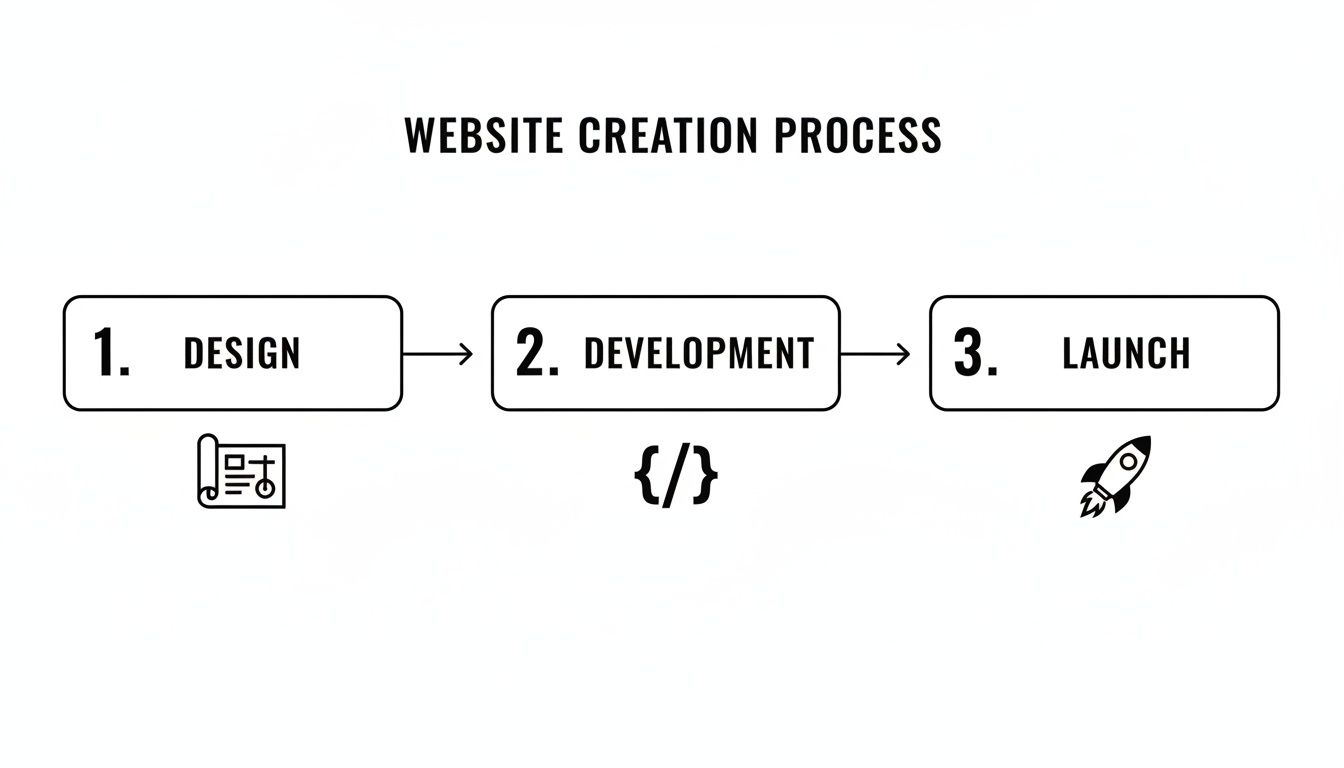
This visual really reinforces how each distinct phase—Design, Development, and Launch—is a crucial and sequential part of the whole project.
Stage 4: Content And Development
With the design approved, two streams of work kick off at the same time. First is content creation, where we craft compelling copy, source high-quality images, and produce any necessary videos. Great content is what gives your design its voice and purpose.
Simultaneously, the design is handed over for development. At Baslon Digital, this is where we build out your website on a powerful platform like Wix, transforming the static mockups into a fully functional, interactive site.
Stage 5: Testing And Launch
Before your website goes live, it undergoes some serious testing. We check every link, button, and form across different browsers and devices to make sure everything works flawlessly. We test for speed, responsiveness, and usability to guarantee a smooth experience for every single visitor.
Once we’ve ironed out any bugs and received your final approval, it's launch time! Your new website is officially live and ready to start attracting and converting customers. The demand for these professional services is clear; in the UK alone, the web design industry supports 2,206 businesses and has seen steady growth since 2020.
Understanding this process is the first step, but for a more detailed look, you can also explore our guide on how to design a website from scratch.
Why Smart Website Design Is A Business Superpower

A great website does more than just sit there looking pretty; it should be actively working for your business 24/7. Investing in smart website design isn’t an expense—it’s one of the most powerful moves you can make. It transforms your online presence from a static digital brochure into a dynamic engine for growth.
Think of your website as your best salesperson, the one that never sleeps or takes a holiday. It’s often the very first interaction a potential customer has with your brand. A polished, professional design doesn't just look good; it instantly builds credibility and tells visitors you’re a serious, trustworthy business.
This initial trust is everything. If someone lands on a site that looks dated or is a nightmare to use, they won’t stick around to find out how brilliant your services are. They'll just click away, and that potential customer is gone for good.
Building Credibility And Winning Trust
First impressions are formed in the blink of an eye, and online, your website's design is that first impression. A clean, modern, and intuitive layout immediately communicates professionalism. It shows you care about your customers' experience from the second they arrive.
On the flip side, a cluttered or confusing site creates a sense of unease. It can suggest a lack of attention to detail, a perception that customers might then apply to your actual products or services. Strategic design makes sure every element, from the fonts to the spacing, works to build confidence.
To truly make your website a superpower, you also need to demonstrate that you protect user data. Implementing strong website security best practices is non-negotiable for building that all-important trust.
Boosting Your Search Engine Visibility
Search engines like Google want to show their users the best, most relevant results. A huge part of that is rewarding websites that provide an excellent user experience, especially on mobile devices. This is why a well-structured, mobile-friendly design is a massive factor in modern Search Engine Optimisation (SEO).
When your site is easy to navigate, loads quickly, and works flawlessly on a phone, search engines notice. They see that people are staying longer and engaging more, which signals that your site is a high-quality resource.
This can lead to higher rankings in search results, making it much easier for new customers to find you organically. In short, good design helps you become more visible to the people who are actively looking for what you offer.
A website's design is the foundation of its performance. It directly impacts how users perceive your brand and how search engines rank your content, creating a ripple effect that touches every part of your business.
Driving Conversions And Sales
A strategically designed website doesn't just attract visitors; it guides them towards taking action. This is where design becomes a direct driver of revenue. By using clear calls-to-action, intuitive navigation, and a frictionless user journey, you can dramatically increase your conversion rate.
Whether you want visitors to book a service, buy a product, or fill out a contact form, smart design removes the hurdles and makes the process effortless. This is especially true in the UK’s booming e-commerce sector. With the market projected to hit £285.60 billion, effective UK web design is essential for capturing your slice of the pie.
Guided User Paths: We design clear pathways that lead users from wherever they land to your most important conversion goals.
Frictionless Forms: Simple, easy-to-fill forms mean more enquiries and fewer abandoned carts. Nobody likes a complicated form!
Compelling CTAs: Visually prominent buttons with clear, action-oriented text encourage users to take that next step.
Ultimately, every element of smart website design works together to not only make your business look good but to actively grow its bottom line. It turns casual browsers into loyal customers and establishes your brand as a leader in a very crowded digital world.
Ready to harness the power of strategic design for your business?
Right, you're fired up and ready to make this website thing happen. But turning that brilliant idea in your head into a live, functioning website can feel like a massive jump. Don't sweat it. With a solid plan, it's not just manageable—it's actually pretty exciting.
Think of it like this: you wouldn't just hop in the car for a cross-country trip without a map, a destination, or at least some idea of how much you'll spend on petrol and snacks. Getting your website project in order is the exact same principle. A bit of prep work now saves a mountain of headaches later.
Your Pre-Project Checklist
Before you even think about hiring a designer or picking a platform, getting your ducks in a row will make the whole thing run smoother. Honestly, a client who's done their homework is a designer's dream and is way more likely to end up with a website they absolutely love.
Here’s a quick checklist to get you organised:
Define Your Primary Goal: What’s the one big thing you need this website to do? Is it about getting sales leads? Selling products? Showing off your incredible portfolio? Get specific.
Identify Your Ideal Audience: Who are you actually talking to? A site built for tech-savvy twenty-somethings will have a completely different vibe to one designed for retired gardening enthusiasts.
Set a Realistic Budget: You need to know what you can comfortably invest. This immediately helps you decide whether you’re going the DIY route, hiring a freelancer, or bringing in an agency.
Gather Your Core Content: Start collecting the essentials. We're talking about your logo, brand colours, the text for key pages (like your 'About Us' story), and any decent photos you have.
Choosing The Right Platform
The platform you build on is the foundation of your entire online presence, so this choice matters for the long haul. For a lot of small businesses, a platform like Wix hits that sweet spot of being powerful, flexible, and not requiring a computer science degree to use.
At Baslon Digital, we’re all-in on Wix. Why? Because it lets our designers get straight to the creative stuff—crafting a totally custom, high-performance experience for your users—without getting tangled up in complicated code. It's a solid solution that puts the power back in the business owner's hands.
How To Select The Right Design Partner
Finding the right designer or agency is a huge deal. You’re not just buying a one-off service; you're starting a partnership. You need a team that "gets" your business and can turn your goals into a design that actually works.
When you're checking out potential partners, ask yourself these questions:
Does their portfolio resonate with you? Take a look at their past work. Do you like their style? Does the quality match what you’re picturing for your own brand?
Do they have positive testimonials? See what other clients are saying. Pay attention to comments about their process, how they communicate, and the results they delivered.
Are they transparent about their process? A good partner won't hide behind jargon. They’ll walk you through their plan, from the first chat to the final launch.
Getting your head around what website design is was step one. Now it's time to actually do something. With your goals sorted and your content ready, you’re in a great position to start a real conversation about building a website that does its job.
Ready to take the next step and create a website that performs? Our team at Baslon Digital is here to guide you every step of the way.
Common Questions About Website Design
Diving into a website project feels a bit like packing for a mystery trip—you’re excited, but you have so many questions. To help you get your head in the game, we’ve tackled some of the most common queries business owners have when they’re just starting out.
How Long Does a Website Design Project Take?
This is the classic "how long is a piece of string?" question. It all comes down to how complex your site needs to be. A simple, clean brochure-style website with just a few pages? You could be looking at 3-6 weeks from kick-off to launch.
But if you’re dreaming bigger—think e-commerce with hundreds of products, custom features, or a massive blog—then you should plan for 2-4 months or even longer.
The timeline really hinges on a few key things:
Scope: How many pages and fancy features are we talking about? The more you add, the longer it takes.
Content Readiness: If you have all your text, images, and branding ready to go from day one, you’ll speed things up massively. Waiting on content is a notorious project-killer.
Feedback: The design process is a dance. Quick, clear feedback keeps the rhythm going and the project on track.
Can I Just Design My Own Website?
You absolutely can. And honestly, platforms like Wix have made it easier than ever. Going the DIY route is a brilliant option if you’re on a shoestring budget and have more time than money.
However, hiring a pro is a totally different ball game. You’re not just paying for a pretty layout; you’re investing in strategy, deep customisation, and SEO know-how that you just can't get from a template.
A professional designer doesn't just make things look good; they build a strategic tool designed to achieve specific business goals, ensuring your site performs as well as it looks.
What Should I Budget For a Professional Website?
In the UK, a professionally built, custom website for a small business usually falls somewhere between £1,500 and £5,000. This gets you a slick, brochure-style site that’s built just for you.
For more complex projects, like a full-blown e-commerce store or a site with unique functionality, the investment can climb to £5,000 to £15,000+. The best approach is always to get a custom quote that’s tailored to exactly what you need.
Ready to create a website that not only answers your questions but actually drives real results? At Baslon Digital, we specialise in crafting stunning, strategic websites that help UK small businesses thrive.
Conclusion: Your Next Step Towards a Great Website
You now understand what website design is—it's the perfect blend of art, strategy, and technology designed to grow your business. From the first impression to the final click, every element matters. A professional website builds trust, attracts customers, and ultimately drives sales.
Don't let your business get left behind with an outdated or ineffective site. It's time to invest in a digital presence that truly represents the quality of your work and helps you achieve your goals.
Ready to take the first step? Our team is here to help you translate your vision into a powerful, high-performing website.


Comments