How to Sell Clothing Online: Your Definitive Guide

Turning your fashion idea into a real, money-making business all starts with a solid plan. Figuring out how to sell clothing online isn't just about pretty pictures; it’s about locking down your niche, picking the right platform (like Wix), and creating a brand that people actually connect with. Think of it as your journey from a sketch in a notebook to a customer hitting 'buy now'.
Your Blueprint For a Successful Online Clothing Store
Ready to finally launch that online clothing store you've been dreaming about? You've picked a great time. The UK's fashion ecommerce scene isn't just ticking over; it's gearing up for some serious growth.
Sales are actually projected to hit a massive £21.01 billion in 2026. That's a 4.6% jump as the market bounces back, and it spells a huge opportunity for anyone with a fresh idea. It’s even better when platforms like Wix make setting up a professional-looking digital shop so straightforward. You can read more about these UK fashion ecommerce projections and see what it means for new brands.
This isn't just another checklist. It's a proper roadmap designed to cut through the noise and give you the practical, actionable steps you need to build a successful online clothing business from scratch.
Finding Your Unique Style Niche
Before a single item goes on sale, you have to know who you’re selling to. Seriously. Are you all about sustainable fabrics, rare vintage streetwear, or maybe plus-size minimalist fashion? Pinpointing your niche is the most important thing you'll do.
A tight focus helps you stand out in what is a very crowded market. It lets you build a loyal community of customers who get what you're doing because it speaks directly to them. It's the difference between curating a collection for a specific person and just throwing clothes at everyone.
A strong niche doesn't just define your products; it shapes your entire brand story, from your website's design to your social media voice. It’s what turns a simple clothing store into a destination.
This visual breaks down the foundational flow, from nailing your niche to building your brand.
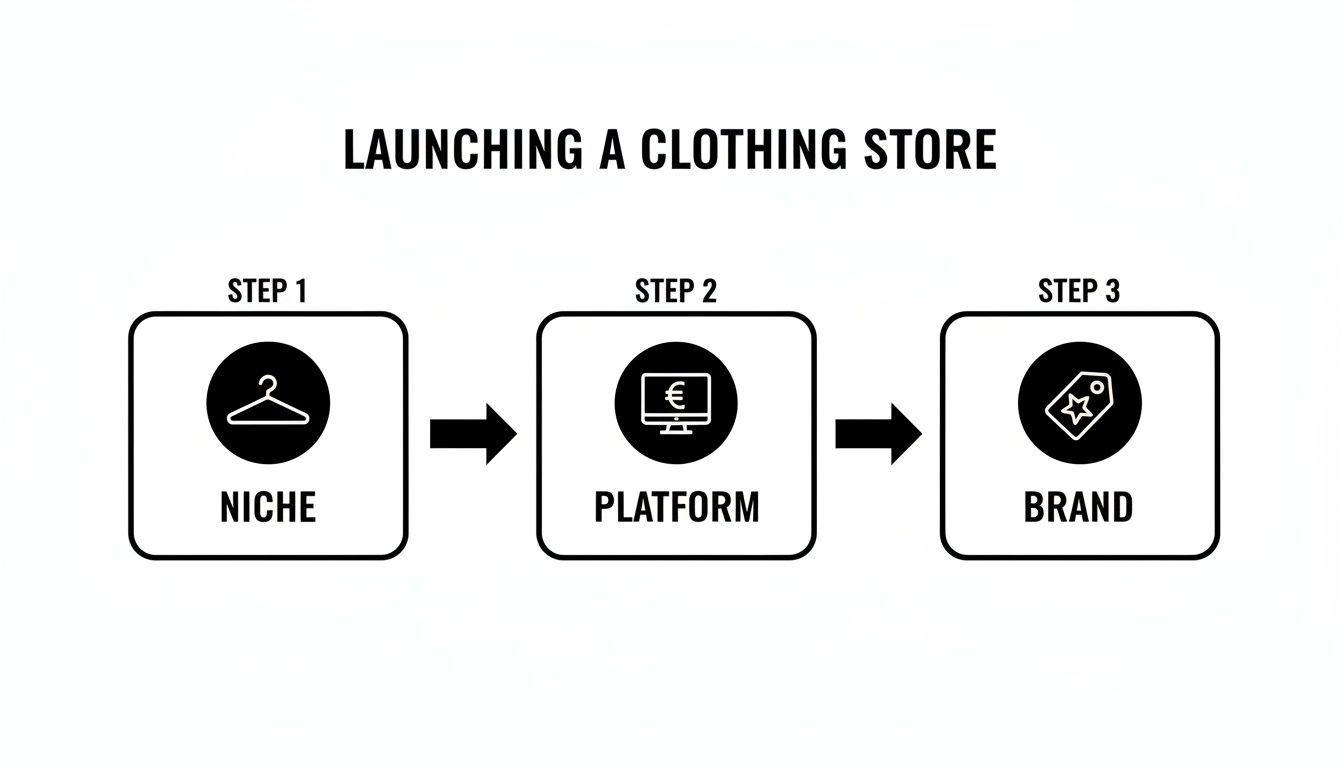
As you can see, these three pillars—Niche, Platform, and Brand—are all connected. Get them right, and you've got the core of a powerful launch strategy.
To really bring your vision to life, it helps to break the whole process down into a few core areas. Each one supports the next, creating a solid foundation for your business to grow on.
Core Pillars of Your Online Clothing Business
Here's a quick look at the essential areas you'll need to focus on to get your online store off the ground. Getting these right from the start will save you a lot of headaches later on.
Pillar | Key Action | Why It Matters |
|---|---|---|
Product Sourcing & Curation | Decide if you'll design, manufacture, wholesale, or curate vintage items. | This decision defines your brand identity, operational needs, and profit margins. |
Brand Identity & Visuals | Develop your store name, logo, colour palette, and overall aesthetic. | A cohesive brand makes you instantly recognisable and builds trust with first-time visitors. |
Ecommerce Platform Selection | Choose a user-friendly and scalable platform like Wix to build your digital shop. | Your platform is the backbone of your business; it needs to handle products, payments, and UX smoothly. |
Each of these pillars is a project in itself, but tackling them one by one makes the launch feel much more manageable. They're the building blocks of a brand that not only looks good but is built to last.
Ready to start building the business you've always imagined? Contact our team today to see how a professionally designed Wix website can bring your fashion brand to life.
Building Your Digital Boutique on the Right Platform
Your website is way more than a digital catalogue; it's the heart of your brand, your virtual shop front, and your number one sales tool. Honestly, picking the right platform to build on is probably one of the biggest decisions you'll make. It’s the foundation for everything—from the customer experience to how easily you can manage the day-to-day grind.
For anyone just starting out in fashion, finding a platform that's powerful but doesn't require a degree in coding is key. This is where solutions like Wix really come into their own. They get rid of the technical headaches with a visual, drag-and-drop setup, letting you focus on what you're actually good at—curating and selling amazing clothes. The goal is to build an online space that feels just as special as a physical boutique.
Choosing Your Platform and Design
The sheer number of options can feel a bit much. You’ve got marketplaces like Etsy and Depop, and then the big e-commerce builders like Shopify and Wix. Marketplaces are decent for tapping into a ready-made audience, but you have almost zero control over your branding. If you're serious about building a real brand, an e-commerce platform is the only way to go.
When you're laying the groundwork, the platform you choose is everything. While there are loads of great options, it’s smart to look at a few comparisons to see what features really match what your business needs. You can find a really helpful external analysis of the best e-commerce platforms for small businesses to help steer your decision. And for businesses here in the UK, local factors can make a difference. For a more focused look, check out our guide on the best ecommerce platforms for small business in the UK.
Once you've picked your platform, it's time for the fun part: design. Please, avoid the temptation to just grab a generic template and stick your logo on it. Your website's design needs to scream your brand's personality.
For a minimalist, high-end brand: Go for a clean design with loads of white space, elegant fonts, and massive, high-resolution photos.
For a vibrant, youthful streetwear brand: Think bold colours, dynamic layouts, and maybe even video backgrounds to capture that energetic vibe.
For a vintage or rustic brand: Look for templates with textures, classic fonts, and a warmer colour palette. You want to give off a feeling of nostalgia and craftsmanship.
Setting Up a High-Converting Store
A gorgeous design is only half the story; your site has to be built to turn visitors into actual customers. This means making the whole shopping experience smooth, trustworthy, and dead simple.
Start with your product galleries. Don’t just throw up one picture. Create galleries that show every item from multiple angles, on a model, and with close-ups of the fabric and little details. The product gallery options in Wix are super customisable, letting you create stunning layouts that make people want to browse.
Next up, tackle the biggest pain point in online fashion: sizing. A clear, easy-to-find sizing guide is completely non-negotiable.
A detailed sizing guide does more than just inform; it builds confidence. By providing precise measurements and fit notes (e.g., "runs small, consider sizing up"), you reduce customer hesitation and significantly lower your return rate.
Finally, you need to nail the checkout process. Nothing kills a sale faster than a clunky or dodgy-looking checkout page.
Key Checkout Elements to Include:
Multiple Payment Options: Make sure you integrate trusted gateways like Stripe (for credit/debit cards), PayPal, and even Buy Now, Pay Later options like Klarna to give people flexibility.
Clear Security Badges: Show off those SSL certificate icons and the logos of your payment providers. It instantly reassures customers that their details are safe.
Guest Checkout: Don't force people to create an account. Offering a guest checkout option can slash cart abandonment by 10-30%.
By taking the time to choose your platform carefully and thoughtfully designing every single part of the customer journey, you're not just building a website. You're creating a powerful, high-converting digital boutique.
Ready to build a stunning website that turns your fashion dream into a reality? Contact our team of Wix design experts and let's create something incredible together.
Crafting Product Photos and Descriptions That Sell
In the world of online fashion, your customers can't touch the fabric or try on the fit. This is where your product photos and descriptions become your most powerful sales tools, turning a casual browser into a committed buyer. They’re relying entirely on what they see and read on the screen.
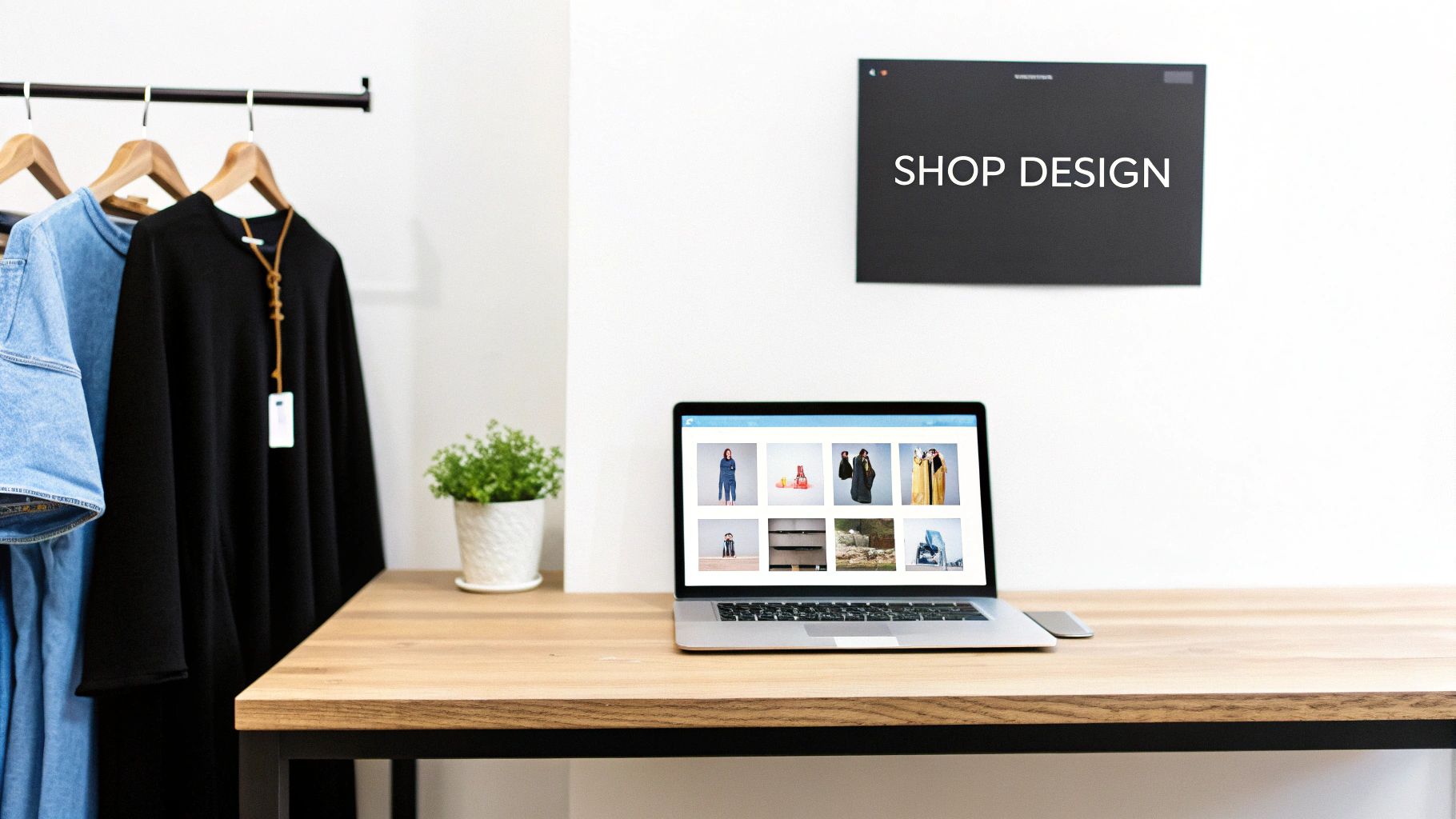
The good news? You don’t need a high-end studio to make your clothes look amazing. Some of the most successful online clothing stores started with just a smartphone and a bit of creativity. It’s all about presenting your items in a way that’s not just clear, but also aspirational.
Mastering Your Product Photography
Great photos do more than just show what an item looks like; they help a potential customer imagine it as part of their own life. A good mix of different photo styles provides a complete picture and appeals to different parts of the buying decision.
You really want to aim for two main types of shots for every single product:
Studio Shots: These are your clean, classic product photos. Think of an item laid flat on a neutral background (a "flat lay") or displayed on a mannequin. Their job is to show the garment clearly, without distraction, focusing on its shape, colour, and details.
Lifestyle Shots: This is where the magic really happens. A lifestyle photo shows the clothing being worn by a person in a real-world setting. It could be a simple shot against an interesting wall or something more dynamic, like someone walking down the street. These images sell a feeling and help customers see themselves wearing your pieces.
To truly make your products stand out, you'll want to get comfortable with the basics. For those looking to dive deeper, there are some excellent guides that break down professional clothing photography techniques you can achieve right at home.
Good lighting is non-negotiable. Seriously. Natural daylight is your best friend—it's free and shows colours most accurately. Find a spot near a large window and shoot during the day to avoid harsh shadows and that weird yellow tint from artificial lights.
For a more in-depth look at creating images that actually convert, our complete guide on e-commerce photography that sells offers even more practical tips.
Writing Descriptions That Connect and Convert
Once your fantastic photos have grabbed a shopper's attention, the product description's job is to close the deal. A weak description that just lists the fabric and size is a massive missed opportunity. Your goal is to answer questions before they're asked, build a bit of desire, and give a customer all the info they need to click "Add to Cart" with total confidence.
Think beyond the boring basics. Instead of just writing "blue cotton dress," tell a story.
A weak description looks like this: Blue cotton dress. 100% cotton. Available in S, M, L.
A strong description looks like this: Effortlessly chic, our Sky Blue Day Dress is crafted from 100% breathable organic cotton, making it perfect for sunny afternoons. The relaxed A-line silhouette drapes beautifully, while the subtle V-neck and delicate button detailing add a touch of timeless elegance. Pair it with sandals for a casual brunch or dress it up with wedges for an evening out.
See the difference? The second example uses sensory and emotive language ("breathable organic cotton," "drapes beautifully") to help the customer feel the quality. It also offers styling suggestions, helping them imagine how the piece fits into their own wardrobe.
To make your descriptions really work for you, make sure you cover these key points:
Fit and Sizing: Be incredibly specific. Use terms like "true to size," "relaxed fit," or "runs small." Providing model measurements (e.g., "Model is 5'8 and wears a size M") is a huge help and can cut down on returns.
Fabric and Care: Describe the feel of the fabric. Is it soft, structured, stretchy? Also, include clear washing instructions to manage customer expectations right from the start.
Unique Details: Call out what makes the item special. Is it the unique tortoiseshell buttons, the intricate embroidery, or the ethically sourced material? These details justify your price and set you apart from the crowd.
By combining stunning, realistic photography with compelling, informative descriptions, you create a shopping experience that builds trust and makes your clothing feel irresistible.
Setting Smart Prices and Managing Your Inventory
So, you’ve got stunning photos and descriptions that could sell a raincoat in the desert. What's next? Nailing your pricing and keeping your stock in check. Get this wrong, and even the most beautiful online shop will struggle. Get it right, and you've built the engine that will power your profitability and keep customers coming back.
Pricing isn't just about slapping a number on a tag. It's about communicating your brand's value.
So many new sellers just add a small markup to what they paid for an item. It's the easy route, sure, but this "cost-plus" thinking often leaves a ton of money on the table. Worse, it completely ignores all the sneaky little expenses that pop up when you're selling clothes online. To build a business that actually lasts, you need to be a bit more strategic.
Working Out Your True Costs and Setting Prices
Before you can even think about a retail price, you have to get intimate with your Cost of Goods Sold (COGS). And no, that isn't just the price you paid the supplier. It's every single penny you spent to get that item into a customer's hands.
Here’s what you absolutely must include in your calculations:
Item Cost: What you paid to source or manufacture the garment itself.
Inbound Shipping: The cost to get those items delivered to your doorstep.
Packaging: Mailers, boxes, tissue paper, thank you notes—it all adds up.
Platform Fees: Those transaction fees from your e-commerce platform (like Wix) and payment processors (Stripe, PayPal, etc.).
Marketing Spend: A small slice of your ad budget, allocated to each item.
Once you have that magic number, then you can start figuring out what to charge.
A classic rookie error is undervaluing your own brand. Your price tag should reflect more than just your costs; it's about the quality of your fabrics, the uniqueness of your designs, and the whole vibe you're creating. Don't be afraid to price for the value you deliver.
Keeping Your Inventory From Becoming a Nightmare
As your business picks up steam, managing stock becomes make-or-break. There's almost nothing worse than selling an item you don't actually have. It's a fast-track to unhappy customers and a damaged reputation. You need a simple, reliable system from day one.
Luckily, modern e-commerce platforms have made this dead simple. When you're adding products in Wix, for instance, you can track stock for every single item. And I don't just mean a total number; you can manage inventory by specific product variants.
Let's say you're selling a T-shirt:
You might have one design, but multiple options that need to be tracked separately:
Colours: Navy, White, Grey
Sizes: Small, Medium, Large, X-Large
By plugging in the exact quantity for each combination (e.g., 10 Navy Smalls, 15 White Mediums), the system automatically subtracts one every time a sale is made. This makes overselling practically impossible and gives you a crystal-clear, real-time view of what you've got.
Using Data to Stop Guessing and Start Knowing
Good inventory management isn't just about avoiding "out of stock" notices. It’s about collecting data to make smarter decisions. Your platform's sales reports are a goldmine. Seriously. They'll tell you:
Your Bestsellers: Which specific items, colours, or sizes are flying off the virtual shelves? This is your signal for what to reorder, and fast.
Your Slow Movers: Which products are just gathering digital dust? This data helps you decide whether to discontinue an item or run a sale to clear it out.
Seasonal Trends: You might spot that certain styles only sell well in summer. This helps you plan your buying and marketing calendar like a pro.
When you regularly look at this data, you stop guessing what your customers want and you start knowing. This data-driven approach means you invest your money in clothes that will actually sell, boosting your profits and building a much stronger online store.
Ready to build a smart, sustainable online store? Let's chat about how our Wix expertise can help you set up a powerful and profitable e-commerce site.
Marketing Your Brand to Find Your First Customers
Getting your online store live is a huge step, but let's be honest—it's just the starting line. Now for the fun part: making some noise and getting people to actually buy your clothes. A solid marketing plan is what turns a brilliant idea into a business that pays the bills.
Forget trying to be everywhere at once. The secret to marketing a new clothing brand without burning out is to put your energy where it’ll have the biggest impact. That means getting smart with search engines and mastering the social media platforms where fashion truly lives.
Getting Found On Google With SEO
When someone’s desperately searching for a "vintage floral midi skirt" or "sustainable men's joggers," you want your store to be the one that pops up. This is where Search Engine Optimisation (SEO) comes in. Think of it as teaching Google that your shop is a relevant, trustworthy answer to what people are looking for.
You don’t need to be a technical whizz to get this right. Just start with the basics:
Keyword Research: Get inside your customer's head. What words would they actually type into Google? Weave these phrases naturally into your product titles, descriptions, and all over your homepage.
Quality Content: A blog is your secret weapon. Writing articles like "How to Style a Linen Shirt for Summer" or "Five Ways to Wear Your Favourite Denim Jacket" doesn't just help customers—it screams to Google that you're an expert in your niche.
Site Performance: Make sure your website is fast and dead simple to use on a phone. A slow, clunky site is a massive turn-off for both shoppers and search engines.
Dominating The Visual World Of Social Media
For a clothing brand, social media isn't a "nice-to-have"; it's everything. It's where you build a community, flaunt your brand's personality, and drive some serious sales. Focus your efforts on the visual platforms where your ideal customers are already scrolling their lives away.
The power of social media in UK fashion is massive. In fact, a whopping 67% of consumers now use platforms like Instagram and TikTok to find new brands. This, combined with influencer marketing, is a huge reason the online women's clothing market is now worth an eye-watering £15.1 billion. You can read more research on the UK's online clothing market to really grasp how crucial these channels are.
Start by building an authentic presence. This is about more than just posting product shots.
Your social media feed should feel like a curated lifestyle magazine for your brand. Share behind-the-scenes content, styling tips, and user-generated photos to build a genuine connection with your followers.
Building Community And Leveraging Influence
Creating a tribe of loyal customers goes way beyond just selling clothes. It's about making people feel like they're part of something special, something cool.
One of the best ways to kick this off is by working with micro-influencers. These are creators with smaller, super-engaged followings (usually 5,000-50,000 followers) who genuinely fit your brand's vibe. A collaboration with them often feels way more authentic to their audience than a post from a mega-celebrity.
And never, ever underestimate the power of User-Generated Content (UGC). Encourage your customers to post photos of themselves rocking your clothes by creating a unique hashtag. When you reshare these pictures (always with permission!), it acts as powerful social proof. It shows potential buyers that real, stylish people already love your stuff.
Finally, don't sleep on your email list. It's one of the most reliable ways to drive repeat business and keep a direct line to your biggest fans. For a deep dive into building a strategy that actually works, check out our guide on email marketing for small businesses that drives growth.
By mixing smart SEO with an authentic social media game, you can build a marketing plan that won't break the bank and will turn casual browsers into loyal customers for life.
Ready to launch a brand that gets noticed? Get in touch with our team to build a stunning Wix website designed to attract and convert your ideal customers.
Getting Paid and Getting it There: Payments, Shipping and Returns in the UK
Getting a customer to click 'buy' is only half the battle. What happens after that click is what turns a one-time buyer into a raving fan. Your payment process, shipping game, and returns policy are the nuts and bolts of customer trust. Getting this stuff right isn't just a nice-to-have; it's essential.

This backend work might not feel as glamorous as designing your next collection, but it has a massive impact on your bottom line and reputation. Let's get into the nitty-gritty of creating a smooth-as-silk journey for your UK shoppers.
Don’t Get Ghosted at the Checkout: Set Up Trusted Payments
Picture this: a customer loves your stuff, fills their basket, heads to checkout... and then bails. Why? Because they didn't recognise or trust your payment options. This happens more than you'd think. Offering a mix of secure, well-known gateways is your secret weapon against abandoned carts.
Luckily, platforms like Wix make this a doddle by integrating with all the big players. You'll want to offer a few key options:
Credit/Debit Cards: The absolute standard. Integrating with a provider like Stripe is a must to accept all major cards. It's what people expect.
PayPal: Loads of shoppers live by PayPal. It gives them an extra layer of security and means they don't have to faff around entering card details.
Buy Now, Pay Later (BNPL): Services like Klarna or Clearpay can be a game-changer. They often nudge customers to spend a bit more by letting them split the cost.
Online shopping in the UK isn't just a trend; it's a way of life. Online sales now make up a whopping 28.6% of all UK retail, with digital spending climbing 6.7% year-on-year. This just proves how critical a seamless payment system is. You can check out the latest UK retail trends from the ONS for the full picture.
From Your Door to Theirs: Nailing UK Shipping
Your shipping strategy is a balancing act between what customers want (fast and free!) and what your business can afford. For UK sellers, Royal Mail and Evri are the go-to choices for reliable, varied services.
When it comes to pricing, you’ve got a few solid tactics:
Flat-Rate Shipping: Charge one set price for all UK orders. It's simple, clear, and avoids any nasty surprises at checkout.
Free Shipping Threshold: This is a classic for a reason. Offer free delivery on orders over, say, £50. It’s a powerful psychological nudge to get people to add just one more thing to their basket.
Calculated Rates: Let your e-commerce platform do the maths. It can calculate shipping based on the parcel's weight and the customer's postcode.
Don’t just send a parcel; deliver an experience. Branded packaging, even something as simple as a custom sticker on the mailer or a handwritten thank you note, makes the unboxing feel special. It’s a small touch that leaves a big impression.
Make Returns a Breeze (and Win Customers for Life)
A dodgy or confusing returns policy is a massive red flag for shoppers. They need to feel confident they can send an item back if it’s not quite right. A clear, fair policy isn't a cost centre; it's a conversion tool.
Make sure your returns policy is dead easy to find on your website. Clearly state the return window (14 or 28 days is standard), what condition the items need to be in, and who pays for the return postage. Being upfront about this builds a huge amount of trust and can be the final push someone needs to make their first purchase.
Ready to build a Wix store with a backend that builds customer loyalty? Get in touch with our expert team at Baslon Digital and let's get you set up for success.
Time to Build Your Online Clothing Brand
You've officially got the blueprint. Everything you need to take that killer clothing idea and turn it into a real, thriving online business in the UK is right here. The road from a sketch in a notebook to your first cha-ching notification is full of twists and turns, but with the right game plan and tools, it's more than possible.
The secret? Start small, but think big. Focus on carving out a strong brand identity that your dream customers will genuinely connect with. It's all about creating an amazing experience from the second they land on your website to the moment they're excitedly unboxing their order.
Don't get bogged down waiting for everything to be perfect. Take what you've learned from this guide and just start building. Your future customers are out there, scrolling right now, just waiting to find you.
Remember, every massive online clothing store started with one single step. Now it's your turn to take it. Your brand's story is ready to be written, and you’ve got everything you need to make it something special.
Ready to bring your fashion vision to life with a stunning ecommerce website that actually sells? Contact the team at Baslon Digital today and let's chat about how we can help you get started.
Comments